Key takeaways
- Juki TL machines need regular oiling at marked points, since they are semi industrial machines built without the sealed lubrication of most domestic models.
- Cone thread belongs on the thread stand, not a spool pin, or top tension complaints usually follow within a few seams.
- A trimmer that beeps or stops cutting usually just needs thread fragments cleared from under the slide plate.
- TL machines take standard 15x1 needles, not industrial DBx1 needles, despite their industrial feel.
- Running a TL at full speed for piecing or applique turns small setup errors into visible flaws, so half speed suits detail work better.
The sewing room went quiet the moment the machine did not. A Juki TL-2010Q that had been humming along for three years started roaring loud enough that a family member asked from the next room if something had broken.
Nothing had broken yet. The machine still made a straight stitch, still fed fabric evenly, it just sounded like a machine about to need a technician, a deep mechanical growl under every stitch that had not been there a month earlier.
Five drops of oil fixed it. Not a repair, not a part, five drops in the spots the manual diagrams on page one and a shop towel to catch the excess. The roar dropped to a purr in the time it took to sew one test seam.
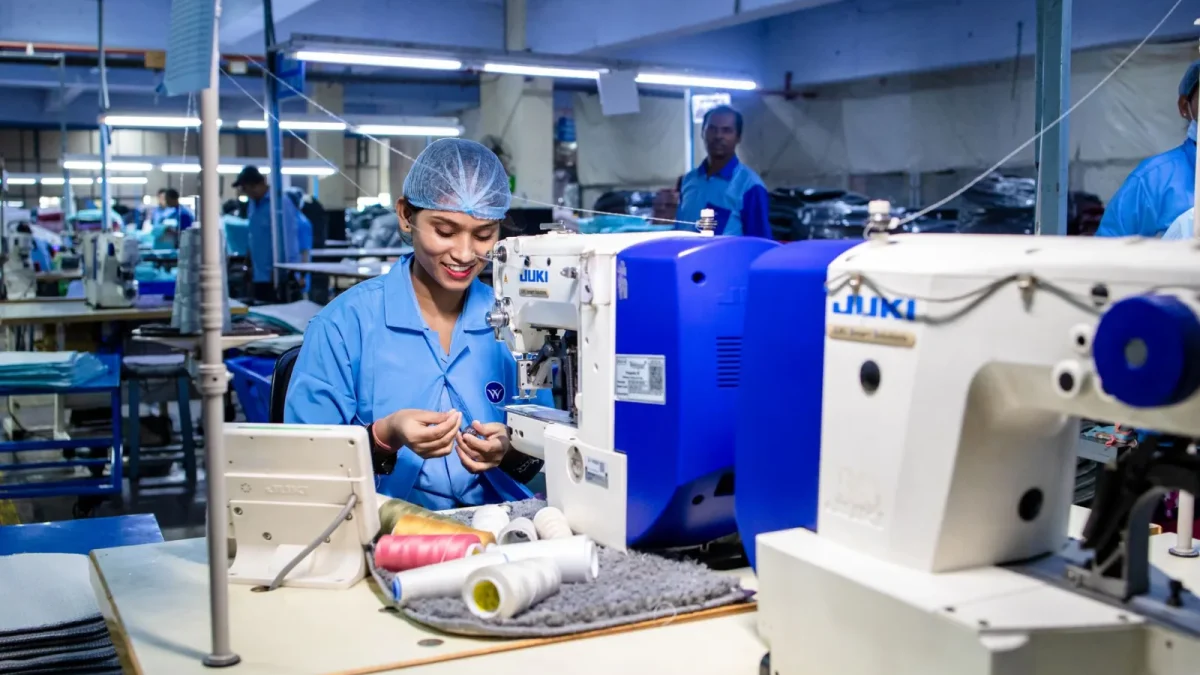
That story plays out constantly with Juki’s TL series, because these are semi industrial machines wearing a home sewing cabinet, and most of their quirks are industrial habits that domestic sewing never taught new owners to expect.
Oil Is Maintenance, Not Repair, on a TL
Domestic sewing machines built in the last twenty years mostly run oil free, sealed and lubricated for life at the factory. That habit does not carry over to the TL-2000Qi, TL-2010Q, or TL-18QVP, because Juki built these as semi industrial straight stitch machines, closer in mechanics to a garment factory machine than a home quilting machine.
The manual for every TL model marks specific oiling points directly on a diagram, usually four to six spots around the hook race and the moving arm above the needle. Juki expects an owner to add a drop or two at each marked point every few sewing sessions, more often under daily quilting use.
Skip that habit and the machine does not fail quietly. It gets louder first, a dry mechanical sound under the stitch that is easy to dismiss as normal for a fast machine. Left dry long enough, that friction wears the hook race itself, turning a five minute oiling task into a parts and labor repair.
- Oil the hook race before the first sewing session of the week, or daily under heavy quilting use.
- Add a drop to the marked point on the vertical arm above the needle bar.
- Check the manual diagram for your specific TL model, since point count varies slightly by year.
- Wipe excess oil with a scrap of cotton fabric before sewing, and stitch a test line to clear any residue.
- Listen for the sound settling back into a smooth hum, not a growl, after oiling.
Use sewing machine oil specifically, not household or general purpose oil, which can gum up over time. A small bottle costs under $5 and lasts about a year of normal oiling under typical home use.
Cone Thread Wants the Thread Stand, Not the Spool Pin
Every TL ships with a thread stand, a separate vertical post that sits beside the machine rather than a spool pin built into the top. That stand is not an accessory. It is how Juki tuned the entire tension path for cone thread.
Large cone spools feed thread straight up and off the top of the cone, which needs a tall stand and a specific pretension guide to control it before the thread ever reaches the top tension dial. Set a cone on a small spool pin instead, or skip the stand’s pretension guide, and thread pulls unevenly off the side of the cone.
Uneven pull off the cone reads as a tension problem at the needle, and it is one of the most common support calls Juki dealers field on TL machines. Owners adjust the top tension dial trying to fix it, when the actual fault sits entirely upstream at the stand.
Cone thread setup
Always feed cone thread up through the thread stand’s guide and its pretension disc before it reaches the machine head, even for a quick test seam. A cone set directly on a spool pin will sew, but tension complaints usually follow within a few seams.
The Trimmer Hides Thread Fragments Under the Slide Plate
The automatic thread trimmer is one of the TL series’ most useful industrial features, cutting both threads at the end of a seam with a tap of the heel of the presser foot lever. It is also a small mechanism that collects thread fragments as a normal part of doing its job.
Those fragments build up under the slide plate near the trimmer’s cutting hook, and enough buildup jams the mechanism. A jammed trimmer usually announces itself with an error beep instead of a clean cut, or the trimmer locks and stops cutting thread at all, leaving long tails at the start of every new seam.
Unplug the machine before removing the slide plate. Fingers work close to the cutting hook during this cleaning, and the machine should have no power running to it at all.
A monthly cleaning under the slide plate prevents most trimmer jams before they start. Slide the plate off following the manual, lift out visible thread fragments with tweezers, and brush the cutting hook area before replacing the plate.

Standard Needles, Industrial Habits
TL machines run at industrial adjacent speeds and feel industrial under the hood, which leads some owners to assume they take industrial needles. They do not. Every TL in the line takes the standard home machine 15×1 needle system, the same system used across most domestic machines.
Owners who install true industrial DBx1 needles, sized and shanked differently, run into timing adjacent symptoms: skipped stitches, a faint clicking sound, or thread that shreds a few inches into a seam. The needle looks close enough to fit in some cases, which makes the mismatch harder to spot.
Stick to 15×1 needles in sizes 75/11 through 100/16 depending on fabric weight, from any quality needle brand. A Juki dealer or the manual will confirm 15×1 for every TL model currently sold.
The Knee Lift Socket Wears Loose
The knee lift is not an optional accessory on a TL. Quilters lean on it constantly to raise the presser foot hands free while repositioning a quilt sandwich, and that repeated use is exactly what wears the socket where the knee lift bar inserts into the machine.
A worn socket shows up as wobble, the knee lift bar shifting slightly side to side instead of moving the foot with one clean, direct motion. It still works, it just feels loose and imprecise, and heavy use speeds up the wear.
A thin shim, even a wrap of tape around the insertion end of the bar, tightens the fit and removes the wobble. Juki dealers also stock a replacement socket for a few dollars when the wear gets past what a shim can fix.
Fifteen Hundred Stitches a Minute Forgives Nothing
A TL-2010Q tops out around 1,500 stitches per minute, roughly double what many domestic machines reach. That speed is a real advantage for straight line quilting, and it is also a magnifying glass held over every small setup mistake.
A slightly under oiled hook, a thread stand set up wrong, a bobbin wound a touch unevenly: all of these produce minor symptoms at 800 stitches per minute and much louder ones at 1,500. Owners troubleshooting a new problem on a TL should suspect setup first, since speed turns small errors into obvious ones fast.
For piecing, applique, or any specialty work, dropping to half speed on the machine’s speed control removes most of that amplification and makes fine control easier besides. Full speed suits long straight quilting lines, not detail work.
The Foot Pressure Screw Nobody Touches
A small screw on top of a TL, easy to overlook next to the more obvious tension dial, controls presser foot pressure, how hard the foot presses down on the fabric. Most owners never touch it after the machine arrives, which works fine until the project changes significantly.
A thick quilt sandwich, three layers plus batting, needs less foot pressure than a single layer of piecing cotton, or the machine fights the extra bulk and feeding turns uneven. Piecing thin cotton needs more pressure than a heavy sandwich, or the top layer can shift slightly against the bottom during the seam.
A quarter turn of the pressure screw in either direction is usually enough to feel the difference on scrap fabric. Test on a scrap sandwich matching the actual project before starting, and note the setting that works so it is easy to return to later.
Every TL Quirk, One Table
Most calls to a Juki dealer about a TL machine map onto one of seven things, and almost none of them are a real mechanical fault.
| Quirk | Symptom | Fix |
|---|---|---|
| Low oil | Growing mechanical growl under the stitch | Oil marked points every session or two |
| Spool pin instead of stand | Uneven top tension, especially with cone thread | Feed cone thread through the stand’s pretension guide |
| Thread fragments in trimmer | Error beep or a trimmer that stops cutting | Clean under the slide plate monthly |
| Industrial DBx1 needle installed | Skipped stitches, faint clicking, shredding thread | Switch to standard 15×1 needles |
| Worn knee lift socket | Wobble in the knee lift bar | Shim the bar or replace the socket |
| Full speed on detail work | Small setup errors turn into visible flaws | Drop to half speed for piecing and applique |
| Wrong foot pressure for the layer count | Uneven feeding on thick or thin fabric | Adjust the top pressure screw a quarter turn at a time |
Owning a TL is not harder than owning a domestic machine, it is just different, built for daily industrial use rather than sealed shut for a weekend on the coffee table.
The roaring machine from the sewing room needed nothing more than the oiling habit its manual had been describing since day one. That is the pattern behind most TL service calls: a machine waiting for an owner to treat it the way Juki built it to be treated.
Keep a small bottle of sewing machine oil by the cabinet, run every cone through the thread stand, and check under the slide plate monthly. Kept up that way, a TL runs for seasons between anything resembling a real repair.
Frequently asked questions
How often should I oil a Juki TL sewing machine?
Oil the marked points on the hook race and the arm above the needle before every sewing session or two under regular use, and daily if quilting for hours at a stretch. The manual diagrams four to six specific points for each TL model. A growing mechanical growl under the stitch is the clearest sign a TL is overdue.
Can I put a cone of thread directly on a Juki TL spool pin?
It will sew, but skipping the thread stand usually causes uneven top tension within a few seams. The stand's pretension guide is built into how Juki tuned the whole tension path for cone thread. Always run cone thread up through the stand rather than setting it on the machine's own spool pin.
Why does my Juki TL beep instead of trimming the thread?
An error beep instead of a clean cut usually means thread fragments have packed in under the slide plate near the trimmer's cutting hook. Remove the slide plate and clear the fragments with tweezers, then brush the area before replacing it. Doing this monthly under regular use prevents most trimmer jams.
What needles does a Juki TL-2010Q use?
The TL-2010Q, along with the TL-2000Qi and TL-18QVP, uses the standard home machine 15x1 needle system in sizes from about 75/11 to 100/16 depending on fabric weight. It does not take true industrial DBx1 needles, despite running at industrial adjacent speeds. Installing a DBx1 needle by mistake typically causes skipped stitches or thread shredding.
What speed should I use for piecing on a Juki TL machine?
Drop to roughly half speed on the machine's speed control for piecing, applique, or any detail work. A TL-2010Q can reach about 1,500 stitches per minute, fast enough that small setup errors like uneven bobbin winding become obvious flaws. Full speed suits long straight quilting lines better than close, detailed work.

Amit Sisodia
Amit Sisodia is a longtime sewing enthusiast and hobbyist repair tinkerer who has spent years diagnosing tension quirks, jammed bobbins, and stubborn feed dogs across everything from vintage treadle Singers to modern computerized machines. He writes practical, tested guides for BobbinWise so home sewists can spot problems early, tackle safe repairs themselves, and know when it's smarter to call in a technician.


