Key takeaways
- Feed dogs on most machines return only after one full needle cycle, not the instant the lever moves.
- Set the lever to sewing position, turn the handwheel one revolution toward you, and watch the teeth reappear.
- A weightless lever means a slipped return spring, while a gritty one means lint in the linkage.
- Front load machines and free arm compacts hide drop feed switches where a carrying hand can bump them.
- Vintage straight stitch Singers use a snap on darning plate instead of a lever, so remove the plate.
The machine came into the shop wrapped in a bath towel, carried like a casserole. Its owner had finished a free motion quilting session the night before, moved the drop feed lever back to the sewing position, and watched nothing happen. The feed dogs stayed below the plate, flat and toothless.
The technician set it on the counter, checked the lever, and turned the handwheel through one full revolution. The dogs rose up through the needle plate as if they had never left. Repair time, four seconds. Charge, nothing, plus one sentence of explanation on the way out.
That sentence is the whole secret, and most manuals bury it in a footnote or skip it entirely. On many machines the feed dogs do not pop up when the lever moves. They wait for a stitch.
The One Revolution Rule
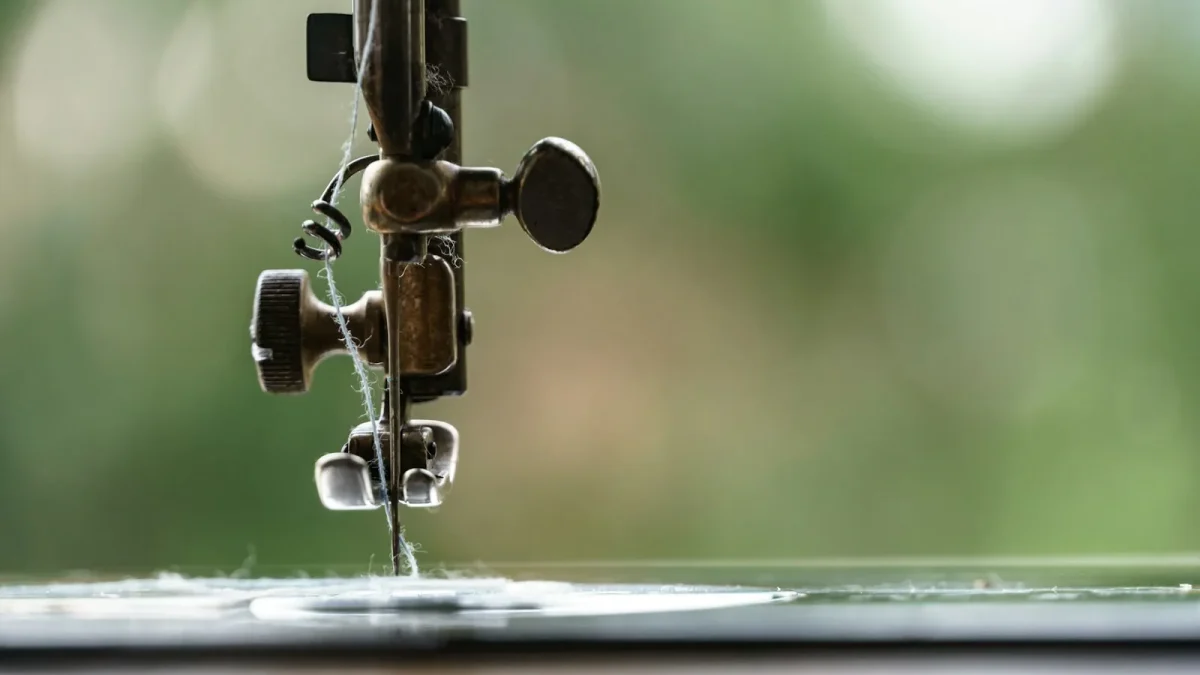
The drop feed lever does not lift the dogs directly. It slides a support or cam that decides whether the feed lifting mechanism is allowed to raise them, and that mechanism only does its lifting as the machine cycles.
Under the bed, an eccentric on the lower shaft rocks the feed bar up, forward, down, and back with every stitch. Dropping the dogs pulls the support out from under that motion. Restoring the support changes nothing visible until the eccentric comes around again and lifts the bar to its full height.
So flip the lever on a resting machine and the dogs are merely cleared to return, not raised. The fix on a huge share of modern machines, including most Janome, Brother, and Juki models: set the lever to the sewing position, then rotate the handwheel toward you through one complete revolution, or sew two slow stitches on scrap. The teeth come back on their own.
The four second fix
Lever to the sewing position, then one full handwheel turn toward you. Do this before any other troubleshooting, every single time the dogs seem stuck down.

The Two Minute Checklist, Most Likely First
Work down this list in order. Most machines are fixed by the second item, and nearly all of them by the fifth.
- Set the drop feed control to the sewing position and turn the handwheel one full revolution toward you. Watch the plate for teeth.
- Confirm the lever direction. The icons mislead people constantly, so try the opposite position and turn the wheel again.
- Check the stitch length. At 0 mm the dogs rise but cannot feed, which looks like the same failure.
- Look for a darning plate or a slick slider mat still covering the needle plate.
- On front load and free arm machines, hunt for a second drop feed switch near the bobbin or on the arm itself.
- Still bald? Move on to lint, oil, and the return spring below.
Reading the Icons Without Guessing
The drop feed control wins the award for the worst iconography on the whole machine. The sewing position shows a raised or jagged row of teeth, sometimes a small triangle row. The free motion position shows a flat line, or teeth drawn below a line.
Plenty of sewists flip the switch toward whichever symbol looks active and select free motion a second time. If your first handwheel turn changed nothing, move the lever the other way and give the wheel one more revolution before declaring anything broken.
Computerized machines add their own wrinkle. Some Brother and Bernina models flash a screen reminder when the dogs are down, and a few raise them automatically the next time you press start, which makes the purely mechanical models feel broken by comparison.
Where Machines Hide the Drop Feed Control
Part of the confusion is that no two machine styles put the control in the same place. Find yours before you assume it is set correctly.
| Machine style | Control location | Watch for |
|---|---|---|
| Modern top load (Janome, Brother, newer Singer) | Slider on the bed behind the needle, or on the back of the free arm | Tiny icons and stiff travel |
| Front load (Bernina, Pfaff, older Elna) | Switch or knob in or beside the bobbin area, sometimes inside the door | Bumped during bobbin changes |
| Free arm compacts | Slider on the underside or the back of the free arm | Flips while carrying the machine |
| Vintage straight stitch and budget models | No control at all | A darning plate snaps over the dogs |
That free arm slider earns a special mention. It sits exactly where a hand wraps to carry the machine, and I see one switched by accident nearly every week at the bench. The owner swears the dogs dropped themselves, and in a way they did.
Lint, Old Oil, and the Gummed Linkage
The drop feed linkage lives under the bed, directly downhill from the lint fountain that is the bobbin area. Fuzz and oxidized oil pack into a sticky felt that slows the mechanism until the dogs rise late, rise halfway, or stop rising.
You will usually feel this before you see it. The lever drags or grinds, and the dogs come up on some cycles but not on others.
Unplug the machine first. Remove the needle plate and the bobbin case, brush the feed area clean, and if your model has a removable bottom cover, open it and pick the felt out of the linkage with tweezers. Finish with one drop of sewing machine oil at the lever pivot and each moving joint, then work the lever ten times.
Watch out
Use sewing machine oil only. Household oils and spray lubricants gum up as they dry and will glue the linkage twice as hard within a few months.
The weightless lever
A lever that flops with zero resistance tells a different story: the return spring slipped off its post. Nothing pulls the linkage back to the raised position no matter where the lever sits.
On machines with an accessible underside, rehooking the spring is a five minute job with needle nose pliers. On sealed bodies it is a shop task, usually $30 to 60, and often folded into a routine service.
No Lever at All: The Darning Plate Machines
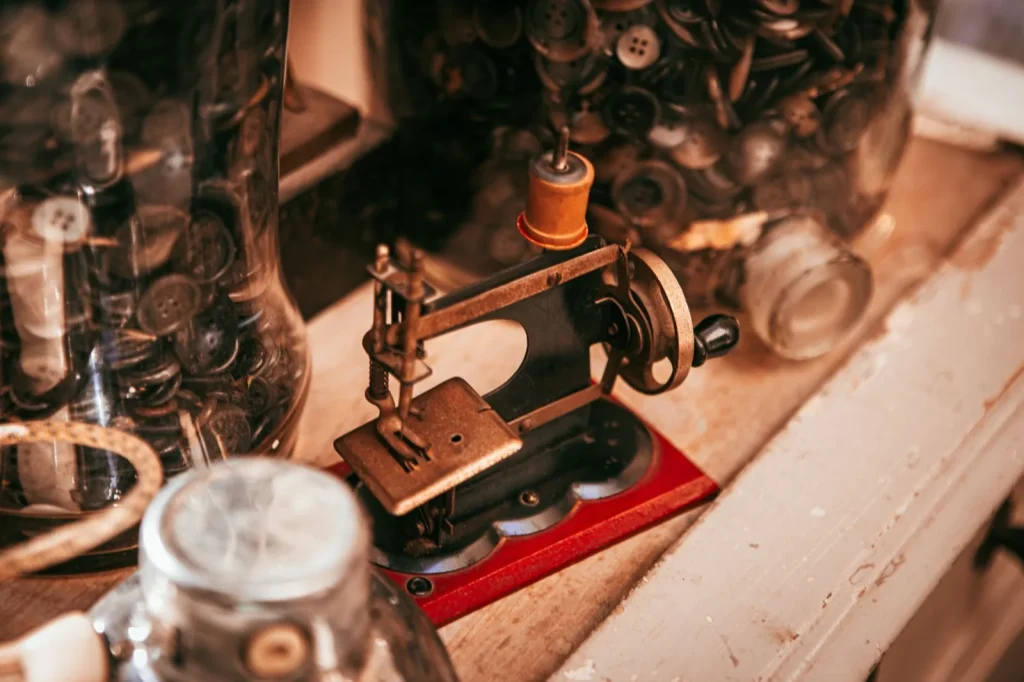
Vintage straight stitch Singers (the 15, the 66, and the Featherweight 221) and plenty of budget modern machines never got a drop feed mechanism. Free motion on these machines means snapping a darning plate over the needle plate so the teeth churn harmlessly underneath it.
If the dogs on one of these will not come up, run a fingernail around the plate. Odds are the darning plate is still clipped in place from the last project. Pop it off, store it with the presser feet, and the machine feeds again instantly. No handwheel turn required, because the dogs never actually dropped.
Teeth Up but the Fabric Still Parked
One impostor wastes hours of troubleshooting. You can see teeth above the plate, yet the fabric sits still under the foot.
Those dogs are healthy, and the problem lives elsewhere. Set the stitch length to 2.5 mm, return the presser foot pressure dial to its normal mark if your machine has one, and peel off any slick free motion mat still taped across the bed.
If the teeth genuinely never break the surface on any cycle, you are back to lever position, lint, or the spring. Feeding faults with healthy raised dogs follow a different repair path entirely.
Before You Wrap It in a Towel
The quilter from the counter laughed about it later. She had rocked that lever a dozen times at midnight, certain the linkage had snapped, and the machine was waiting for one stitch the whole time.
So keep the order. Lever to the sewing position, one full handwheel revolution, icon check, stitch length check, a hunt for darning plates and bumped sliders, then the cleanout with a single drop of oil. Somewhere on that list, nearly every machine gets its teeth back.
A truly weightless lever or a linkage still frozen after cleaning is a real repair, and a small one as repairs go. Everything else fixes itself the moment the needle takes its first full trip.
Frequently asked questions
Why will my feed dogs not come up after free motion quilting?
On most machines the lever only resets the mechanism, and the dogs rise on the next full needle cycle. Set the control to the sewing position and turn the handwheel one complete revolution toward you. If they stay down, check the icon direction, the stitch length, and the linkage for lint.
Which way do I turn the handwheel to raise feed dogs?
Turn it toward you, so the top of the wheel rolls in your direction, one full revolution. Turning it away can loosen the thread or unthread the needle on many machines. Sewing two slow stitches on scrap does the same job.
What do the icons on the drop feed lever mean?
A raised or jagged row of teeth marks the sewing position, with the dogs up. A flat line, or teeth drawn under a line, marks the free motion position with the dogs down. The symbols are tiny, so try both positions and turn the handwheel after each.
My drop feed lever feels loose and weightless. Is it broken?
Probably the return spring slipped off its post under the bed. The lever still moves but nothing pulls the linkage back up. On machines with a removable bottom cover it is a quick rehook with pliers, and a shop will usually charge $30 to 60.
How do I raise the feed dogs on an old Singer with no lever?
Straight stitch models like the Singer 15, 66, and Featherweight 221 never drop their dogs at all. They use a darning plate that snaps over the needle plate for free motion work. Remove that plate and the teeth are back in business immediately.

Amit Sisodia
Amit Sisodia is a longtime sewing enthusiast and hobbyist repair tinkerer who has spent years diagnosing tension quirks, jammed bobbins, and stubborn feed dogs across everything from vintage treadle Singers to modern computerized machines. He writes practical, tested guides for BobbinWise so home sewists can spot problems early, tackle safe repairs themselves, and know when it's smarter to call in a technician.