Key takeaways
- A Singer's printed dial number is a starting point, so set the real balance with a two color test seam.
- Modern Singers split across Class 15, 15J, and 66 bobbins, and a near fit wrong class drifts tension without ever jamming.
- A nicked bobbin plate, a $10 part, causes symptoms that look exactly like a tension fault.
- Heavy Duty machines sew fast enough that a small tension error repeats itself into a visible flaw down the seam.
- A budget Singer should sew a balanced seam on cotton even though it will not match a premium machine on chiffon.
More Singers land on this bench than any other badge, some weeks three or four in a single afternoon. A strange pattern repeats itself almost every time.
The machine sews a clean, balanced seam for the tech in about ten minutes. It goes home, sews beautifully for a week, then starts looping thread on the underside of the fabric again.
Nothing broke in transit and the machine did not forget how to sew. In nearly every case, one specific quirk crept back in: a dial nudged past its sweet spot, a bobbin pulled from the wrong jar, a nicked plate catching thread on its way past the hook.
Singer‘s spread from budget entry machines to fast Heavy Duty workhorses means tension complaints cluster around a short, specific list of causes, not bad luck and not a badge that sews worse than the others. Here is that list, in the order it actually shows up on a service ticket, plus the reset that settles a modern Singer for good.
The Dial Rarely Starts Where It Says
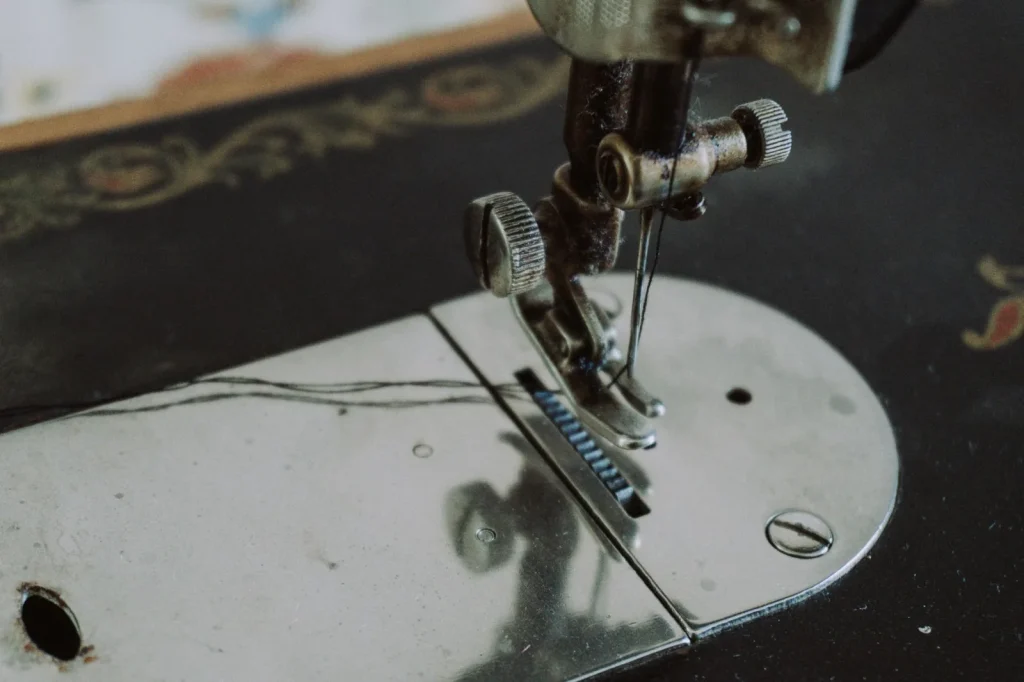
Printed dial numbers promise more precision than a mass produced machine can deliver. Budget Singers commonly leave the factory anywhere from half a number to a full number off true balance: the dial reads 4, but that specific machine actually settles closer to 3 or 5.
The stamped tension discs and the printed faceplate come off separate lines, assembled fast. Nobody at the factory fine tunes your dial against a test seam, so the printed number is a starting position, not a promise.
Set it properly with a two color test. Thread the top with one color, wind a bobbin in a contrasting color, and sew a straight seam at a 2.5 mm stitch length on two layers of folded cotton scrap.
Look at the top of the fabric first. Bobbin colored loops on top mean the tension is too tight; the top color showing on the underside means it is too loose. Move the dial in half number steps and resew until both colors lock in the middle of the fabric, invisible from either side.
Three Bobbins Wear One Badge
Singer’s own lineup splits across three bobbin classes: the common flat sided Class 15, Singer’s own Class 15J with gently bowed sides, and the older domed Class 66 still fitted to a few mechanical models sold new today. All three sit close enough in size to trade places in a pinch, which is exactly the trap.
A near fit bobbin rarely jams outright. It rocks a fraction of a millimeter inside the case as the hook spins, and that tiny wobble shows up as tension that drifts in slow waves through a seam rather than a hard stop.
Verify class by the letter and number printed in your manual or stamped near the bobbin door, never by eyeballing a mixed bin from three feet away. A 15 and a 15J look nearly identical until you set them side by side under a lamp.
A Heavy Duty 4432 came in twice last spring with the same complaint: fine for a day, then loose, wavy stitches by evening. The fix was not the dial. It was an inherited jar of mixed bobbins kept under the machine’s cabinet, half of them Class 66 pulled years earlier from an older family machine. Sorting the jar down to matching 15J bobbins and bagging the rest ended the callback for good.
Buy by class, not by eye
Singer prints the bobbin class inside the accessory compartment or in the manual’s parts list. Search that class letter and number when reordering rather than trusting a blister pack labeled to fit Singer generally. A correctly classed ten pack runs about $6 to $9 and outlasts a season of guessing.
The Plate Nobody Suspects
Modern Singers cover the bobbin with a clear plastic drop-in plate, and that plate scratches and nicks earlier than most owners expect. A dropped pin, a seam ripper set down carelessly, or years of lint working under the edge all leave a burr the eye can miss.
A nicked plate catches bobbin thread on its way past on every single rotation of the hook, which reads exactly like a tension fault: looped stitches, a faint clicking sound, thread that frays before it breaks. Owners chase the dial for weeks before anyone checks the plate itself.
Unplug the machine before lifting the plate free, then hold it up to a lamp at an angle. A scratch that catches light in a bright line, especially near the needle opening, is the culprit.
A $10 replacement plate, occasionally paired with a new bobbin case if the nick reaches the tension spring channel, fixes what looks like a stubborn tension problem in about five minutes.
Where Simple and Start Machines Lose the Thread
Singer simplified the threading path on its entry Simple and Start series to make threading friendlier for new sewists: fewer guides and a shorter route from spool to needle. That same simplicity makes it easy for thread to hop out of the takeup lever’s catch if you thread quickly or skip watching the last step.
The symptom looks like tension trouble: loose loops for a few stitches, then the top thread disappears from the seam entirely. It is really a threading problem wearing a tension costume.
Rethread with the presser foot up, which releases the tension discs and lets thread seat properly between them. Go slowly through each guide and watch the takeup lever rise to the top of its travel with the thread visibly hooked, not just passing near it.
Heavy Duty Speed Turns Small Errors Loud
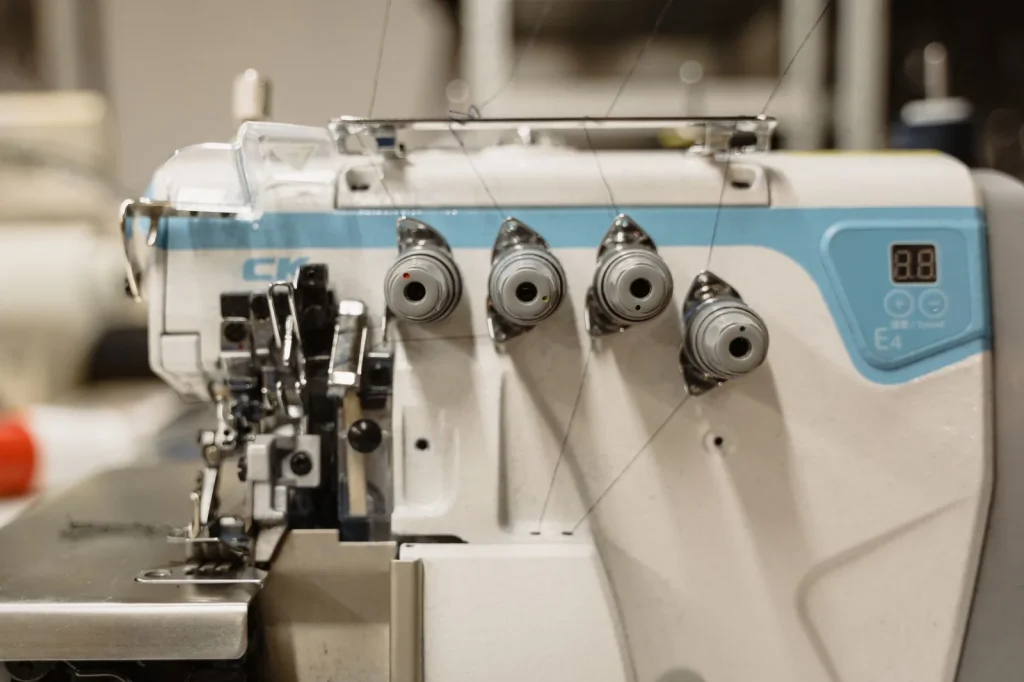
The Heavy Duty 44 series runs at roughly 1100 stitches per minute, well past the more modest pace of the Simple and Start machines. At that speed, a small tension error that would barely register on a slower machine repeats itself several times a second and turns into a visible flaw down the whole seam.
Metallic thread and heavier topstitching thread, 30wt and up, trigger this most often, since both resist feeding smoothly through discs tuned for standard 40 to 50wt thread.
Watch out
Running a spool of metallic or heavyweight thread at full pedal on a Heavy Duty machine asks 1100 stitches a minute to catch every tiny hiccup. Slide the speed control down or ease off the pedal for the length of that spool, and save full speed for balanced all purpose thread.
The Singer Reset, Step by Step
Most modern Singer tension complaints clear with the same five step sequence, followed in order rather than jumping straight to the dial.
- Open the bobbin door and confirm the bobbin class against your manual: 15, 15J, or 66.
- Pull the plate and case and check both under a lamp for nicks, scratches, or a hairline crack near the tension spring.
- Rethread top and bobbin from empty, foot up, guiding thread through every marked point in order.
- Sew a two color test seam and set the top dial from 4 in half number steps until the colors lock in the middle of the fabric.
- Test on the actual project fabric, not just scrap cotton, before trusting the setting for a full seam.
Singer Lines at a Glance
Bobbin class and typical quirk vary enough across the lineup that it helps to see them side by side before you shop for parts or troubleshoot a specific model.
| Singer line | Typical models | Bobbin class | Common tension quirk |
|---|---|---|---|
| Start | 1304, 1306 | Class 15 | Thread hops out of the takeup on fast rethreading |
| Simple | 3223, 3232, 3337 | Class 15 | Factory dial ships up to a full number off true |
| Heavy Duty | 4423, 4432, 4452 | Class 15J | 1100 SPM motor amplifies small tension errors |
| Stylist and Quantum Stylist | 7258, 9960, 9985 | Class 15J | Drop-in plate nicks early from frequent stitch changes |
| Scholastic and Tradition | 2259, 2277 | Class 66 | Domed bobbins drift if a 15J sneaks into the jar |
Is the Machine at Fault, or Is It the Fabric?
Every fix above assumes the machine can do the job asked of it, and that deserves a fair check before you blame the dial again.
A $180 Singer will not glide through silk chiffon or slippery lining the way a $900 machine with a refined tension system and a heavier flywheel does. That gap is real, and buying more machine is the honest answer for that specific fabric.
What a budget Singer should do, after the reset above, is sew a balanced, unlooped straight seam on quilting cotton or broadcloth with a fresh 80/12 universal needle and standard 50wt thread. If it cannot manage that basic job, something is genuinely wrong: a fatigued tension spring, a burr in the thread path, or a timing issue past the reach of a home fix.
Test on scrap cotton first. A seam that balances there but struggles on chiffon is a fabric mismatch, not a fault. A seam that never balances, even on cotton, earns a bench visit.
Work through the list in order the next time a Singer starts misbehaving: bobbin class, plate and case condition, a fresh rethread, then the dial. Most complaints resolve before you ever touch that last step.
Keep a spare plate, a correctly classed ten pack of bobbins, and one marked reference bobbin from the machine’s original set in a small bag near the machine. The next drift usually announces itself as one of these five causes, and now you know which to check first.
A modern Singer earns its reputation honestly once these quirks are settled. It sews the seams it was built for, all day long, without asking for much more than clean thread and an honest bobbin.
The same test appears in a different context in Pfaff IDT Problems: When the Built-In Walking Foot Acts Up.
If your machine is still under warranty, read Mini Sewing Machine Problems: What $30 Actually Buys first.
Frequently asked questions
Why does my Singer sew fine at the shop but loop thread again at home?
Usually a different bobbin ended up in the machine, often pulled from a mixed jar that includes the wrong class. A jostled dial during transport or a switch to a different thread weight causes the same symptom. Rerun the two color test before assuming the machine is broken.
What bobbin does a Singer Heavy Duty 4423 use?
The Class 15J, Singer's own variant with gently bowed sides. It looks close to a standard Class 15 but sits about 0.4 mm different in height, enough to rock in the case and drift tension. Buy by the class printed in the manual, not by eye.
Should I adjust the bobbin case tension screw on a modern Singer?
Rarely, and only after ruling out bobbin class, a nicked plate, and top tension. The screw moves through its entire range in well under one full turn, so treat any adjustment as an eighth turn followed by a test seam. Mark the starting position first so you can return to it.
Can a scratched bobbin plate really cause a tension problem?
Yes. A nicked edge catches bobbin thread on every rotation of the hook, which produces looped stitches and frayed thread that look exactly like a tension fault. A replacement plate costs about $10 and often ends a long running complaint in minutes.
What speed should I sew metallic thread on a Heavy Duty Singer?
Well under the machine's full 1100 stitches per minute. Slide the speed control down or ease off the pedal, since full speed repeats any small tension error several times a second and turns it into a visible flaw.

Amit Sisodia
Amit Sisodia is a longtime sewing enthusiast and hobbyist repair tinkerer who has spent years diagnosing tension quirks, jammed bobbins, and stubborn feed dogs across everything from vintage treadle Singers to modern computerized machines. He writes practical, tested guides for BobbinWise so home sewists can spot problems early, tackle safe repairs themselves, and know when it's smarter to call in a technician.