Key takeaways
- The factory 90/14 needle causes most of the skipped stitches owners blame on the HD3000 itself.
- A drop feed lever hidden low on the free arm gets bumped more often than any part actually breaks.
- The top mounted foot pressure dial creeps toward maximum over years of normal vibration.
- A glazed bobbin winder tire causes the squeal, and it wipes clean or replaces for about $5.
- This is a fully mechanical, oil friendly machine built to run for thousands of hours on routine care.
Search for Janome HD3000 problems on any sewing forum and the same shape turns up every time. The praise thread runs on for pages, full of smooth stitches, a quiet motor, and owners who have sewn on nothing else for a decade. The complaint thread, by contrast, stops at three items, and longtime members can list all three from memory.
A universal needle that skips on thick seams. A drop feed lever that hides until a resting hand bumps it by accident. A foot pressure dial that creeps toward maximum after a few years of regular use, and that is the entire list, repeated by owner after owner.
None of the three sends a healthy HD3000 to a repair bench. Each one is a five minute fix once an owner knows where to look.
This guide covers those three headline complaints in full, plus a few smaller quirks worth knowing: a squealing bobbin winder, a needle threader with a real size limit, and a couple of accessory rules that trip up secondhand buyers.
The Six Real Complaints, at a Glance
Every complaint an HD3000 owner is likely to run into traces back to one of six causes, and each one has a fix that costs less than a service call.
| Symptom | Likely cause | Fix |
|---|---|---|
| Skipped stitches on denim or canvas | Factory needle is too fine for heavy fabric | Switch to a jeans needle before the thick section |
| Fabric stops feeding, foot still moves normally | Drop feed lever bumped to the lowered position | Flip the lever back up under the free arm |
| Delicate fabric feeds marked or puckered | Foot pressure dial crept toward maximum | Reset the dial to its marked detent |
| Bobbin winder squeals while filling | Rubber winder tire has glazed over | Wipe with isopropyl alcohol or replace the tire |
| Needle threader hook will not catch | A too fine needle bent the hook | Realign or replace the threader, then size needles up |
| New feet or bobbins do not fit right | Wrong accessory family purchased | Buy the correct feet and bobbin class for this machine |
Skipped Stitches on Thick Work
The HD3000 leaves the factory with a 90/14 universal needle installed, a fine general purpose size built for quilting cotton and mid weight apparel fabric.
That same needle is also the single biggest source of the machine’s most common complaint. Owners buy an HD3000 for its heavy fabric reputation, then feed a folded denim hem past the factory needle and watch it skip every third stitch.
The fix follows the same rule as every heavy duty machine: match the needle to the fabric, not to the machine’s reputation on the box. A 100/16 jeans needle crosses a folded denim hem without hesitation, and a true multi layer, flat felled seam wants a 110/18.
| Project | Needle size | Needle type |
|---|---|---|
| Quilting cotton and light knits | 75/11 | Universal or ballpoint for knits |
| General apparel, factory default | 90/14 | Universal |
| Denim hem, one to two layers | 100/16 | Jeans |
| Flat felled or multi layer denim seam | 110/18 | Jeans |
| Canvas or light upholstery fabric | 100/16 | Denim, sized to the weave |
| Free motion quilting | 90/14 | Quilting or topstitch |
Keep a 90/14, a 100/16, and a 110/18 in the accessory box at all times. That small stock alone prevents nearly every skipped stitch complaint filed about this machine.
The Drop Feed Lever Nobody Can Find
The second complaint always starts the same way. Fabric stops moving under the needle while the presser foot still lifts and lowers normally. It feels like a broken feed mechanism, and the panic that follows is real.
It is almost always the drop feed lever, and the HD3000 hides it well. The lever sits low on the free arm, tucked near the base right where a hand naturally rests while turning a sleeve or steering a hem. A stray brush from a resting palm is enough to knock it into the dropped position.
A local repair counter hears some version of this story at least once a month: an owner arrives certain the feed dogs have failed, and the technician finds the answer in about four seconds without opening a single screw.
Check this first
Before assuming a feed dog problem, a motor fault, or a timing issue, look at the drop feed lever on the free arm. Flipping it back to the sewing position solves the large majority of no feed complaints on this machine, with no tools and no cost.
Foot Pressure Dial Drift
The foot pressure dial sits right on top of the machine, within easy reach, which is convenient until it becomes the problem. Years of ordinary sewing vibration work the dial loose a fraction at a time, creeping it toward maximum without anyone touching it on purpose.
A dial pinned near maximum presses the foot down harder than most fabric needs. Heavy denim barely notices. Chiffon, silk, and other delicate fabric does not: it feeds through marked, stretched, or puckered along the stitch line, even though the machine is only doing what the dial tells it to do.
The reset takes seconds. Turn the dial back to its marked detent, a light click roughly in the middle of its range, and test on a fabric scrap before sewing the real seam. Some owners mark that detent with a dot of nail polish the first time they find it, so a future drift is obvious at a glance.
Bobbin Winder Squeal and the Threader’s Needle Limit
The Winder Tire Glazes With Age
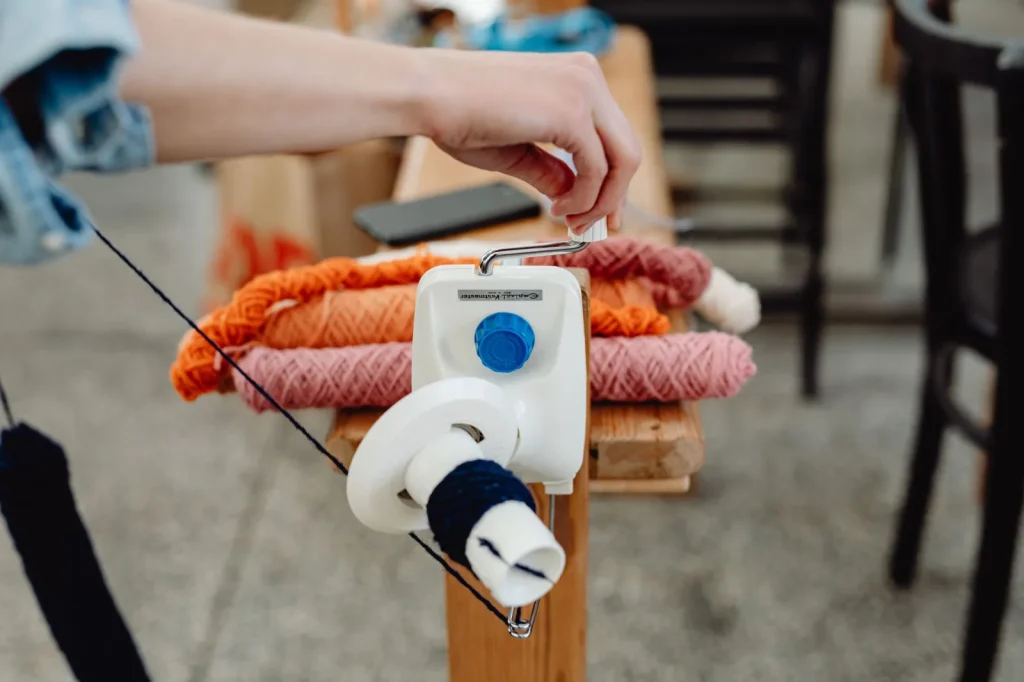
A small rubber friction tire drives the HD3000’s built in bobbin winder, pressed against the handwheel to spin the bobbin while the needle stays disengaged. Rubber held under light pressure for years gradually glazes, losing the tackiness it needs to grip cleanly.
A glazed tire slips instead of gripping, and that slip shows up as a squeal, sometimes paired with a bobbin that winds slower and softer than usual. Neither symptom points to a failing motor or worn gearing.
A cotton swab dipped in isopropyl alcohol, worked around the tire’s edge for a minute, restores enough grip to quiet most winders. If the squeal returns within a few weeks, the tire has hardened past saving, and a replacement, around $5, swaps on in under ten minutes.
The Threader Has a Needle Size Floor
Early HD3000 units carry a needle threader built around a fine wire hook, precise enough to slip through a needle eye automatically but delicate enough to bend under the wrong needle. Janome specifies 75/11 as the finest needle the threader should engage.
Drop in a 60/8 or 65/9, common choices for the lightest silks and sheers, and the hook can catch wrong and bend within the first few uses. A bent hook then misses the eye on needles of every size, not just the fine ones that caused the damage.
Unplug the machine before checking or adjusting the threader, since the work happens beside the needle. A gently bent hook can sometimes be coaxed back into alignment with fine pliers under good light. A hook that has snapped needs a replacement threader assembly.
Feet, Bobbins, and the High-Shank Rumor
The HD3000 belongs to Janome’s 7 mm stitch width family, and that single fact settles most accessory questions before they come up. Presser feet, the throat plate, and the clearance around the needle are all sized for a 7 mm swing, not the wider 9 mm family Janome also builds.
Bobbins follow an equally simple rule: a standard class 15 bobbin, the same size used across a huge range of home machines from several brands. No specialty part number to hunt down, no brand locked bobbin to reorder at a premium.
A persistent rumor claims the HD3000 needs high shank presser feet because of its heavy duty build. It does not. The shank height is standard low shank, using the same snap on foot system found on most home machines, which keeps generic and off brand feet compatible and affordable.
An Oil-Friendly Machine That Just Keeps Going
Underneath its short complaint list, the HD3000 is a fully mechanical machine with no computer board to fail and no sensor array to drift out of calibration. That simplicity is most of why the complaint thread stays short: there are not many parts left to go wrong.
One drop of sewing machine oil at the hook race, applied about once a month under regular use, keeps the mechanism running the way it did on day one. Add the drop, run the machine briefly on scrap fabric to work it through, then wipe away the excess.
One HD3000 that came through a local shop for a routine tune up had logged more than 2,000 hours of use according to its owner’s sewing log, a quilter who tracked every project across eight years. Its entire service history was short: needles changed by the project, oil once a month, and one replacement winder tire around year five. No belts, no boards, no motor work.
That is the real HD3000 story underneath the forum threads. The complaints are genuine, but they are also small, cheap, and preventable once a person has seen each one a single time.
Learn the three headline quirks covered here, keep a small needle assortment and a bottle of machine oil within reach, and treat the drop feed lever as the first thing to check whenever fabric stops moving. Handled that way, an HD3000 is a machine built to outlast several sewing hobbies’ worth of projects on a single owner.
Frequently asked questions
What needle size does a Janome HD3000 need for denim?
Switch to a 100/16 jeans needle for a standard denim hem, and move up to a 110/18 for a multi layer flat felled seam. The factory installed 90/14 universal needle is sized for lighter fabric and is the leading cause of skipped stitches reported on this model.
Why did my Janome HD3000 stop feeding fabric?
Check the drop feed lever on the free arm before assuming a bigger problem, since it sits low enough to get bumped by a resting hand. Flipping it back to the sewing position restores normal feeding in seconds, with no tools needed.
Does the Janome HD3000 need high shank presser feet?
No, that is a common myth. The HD3000 uses standard low shank, snap on feet from the 7 mm accessory family, the same ecosystem shared by most home sewing machines.
What bobbin does the Janome HD3000 use?
A standard class 15 bobbin, the same size used across a wide range of home machines from several brands. No specialty part number or brand locked bobbin is required.
How often should I oil a Janome HD3000?
One drop of sewing machine oil at the hook race about once a month under regular use is enough to keep it running smoothly. Unplug the machine first, add the drop, then stitch a few inches of scrap fabric to work the oil through before wiping away any excess.

Amit Sisodia
Amit Sisodia is a longtime sewing enthusiast and hobbyist repair tinkerer who has spent years diagnosing tension quirks, jammed bobbins, and stubborn feed dogs across everything from vintage treadle Singers to modern computerized machines. He writes practical, tested guides for BobbinWise so home sewists can spot problems early, tackle safe repairs themselves, and know when it's smarter to call in a technician.