Key takeaways
- Surface bloom wipes away completely with oil and a cloth, but pitting leaves cosmetic scars behind even after full function returns.
- Steel wool belongs on a sewing machine only at the finest 0000 grade and only with oil worked in first, never dry and never near paint or a decal.
- A seized screw or shaft wants a multi-day oil soak and small daily turns, since forcing it is the fastest way to snap it off completely.
- A flooded or soaked machine has roughly 48 hours before bloom sets in, so stripping, drying, and oiling it fast beats a full rust removal job later.
The auction table held six sewing machines pulled out of a flooded storage unit, every one of them speckled orange across the bed and under the handwheel. Most bidders in the room took one look and moved on to the dry lots.
A black cabinet machine with heavy freckling and a handwheel that would not budge sold for 40 dollars, mostly because nobody else wanted to gamble on it. The listing said flood recovery, powers on, sold as is, and left the rest to whoever carried it home.
Under a bright lamp at the kitchen table that night, the damage sorted itself into two piles: a lot of surface bloom that would likely wipe away, and one seized screw that would decide whether the next week was worth spending. That split, bloom against something worse, is the first thing to sort out on any rusted machine before a single tool touches it.
Reading the Damage Before You Touch It
Rust on a sewing machine shows up in three depths, and each one gets a different response. Mixing them up wastes time on the easy cases and risks real damage on the hard ones.
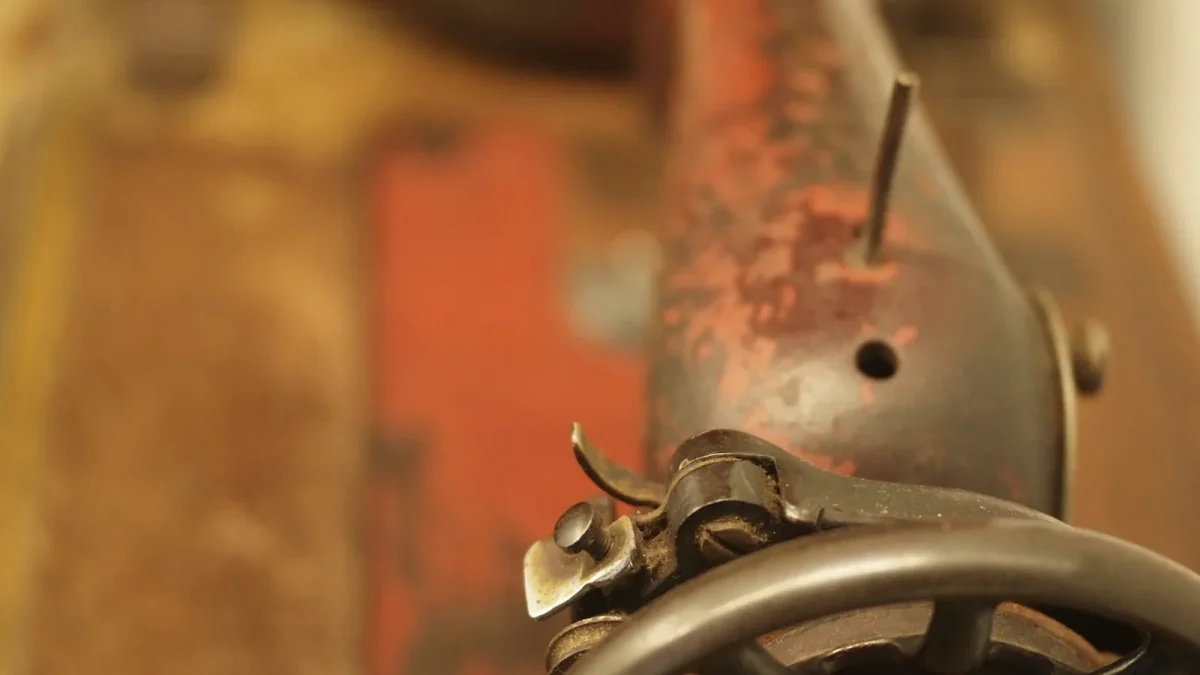
Surface bloom is the mildest and the most common: a fine orange dust sitting on bare steel, usually on the bed shafts, screw heads, or any bright metal the machine’s finish does not cover. A fingertip dragged across it picks up color, but the metal underneath is sound. This kind clears completely.
Pitting is bloom that sat for months or years before anyone dealt with it. Once it lifts, small gray craters remain where the surface used to be smooth. Function returns fully on a part that moves again, but the roughness stays visible under a loupe or a dragged fingernail, since no amount of polishing erases a pit, only smooths its edges.
Seized rust sits at the deep end: a screw, shaft, or hinge pin rusted enough to fuse two surfaces together so nothing turns at all. This is the case that decides whether a machine is a weekend project or a parts donor, and it rewards patience more than any single product on a shelf.
The Removal Ladder, From Gentle to Serious
Start at the top of this list and move down a step only if the one before it does not finish the job. Every step down uses more material removal, and material removal is exactly what a sewing machine’s tight tolerances cannot spare.
Bloom on Bright Metal
A few drops of sewing machine oil worked into a soft cotton cloth lifts most bloom in under ten minutes. Rub with the grain of the metal, switch to a clean section of cloth once it turns orange, and repeat until the cloth comes away clean.
Light Rust That Oil Alone Will Not Lift
Dip a pad of 0000 grade steel wool, the finest grade sold, in sewing machine oil before it ever touches the machine. Oil first is not optional: dry steel wool scratches bare metal and sheds fine wire fibers that stick to anything magnetic inside the machine.
Work in small circles and add oil as the pad dries out. A brass brush reaches corners and screw slots the steel wool pad cannot, since brass is soft enough not to gouge the metal underneath it.
Frozen Screws and Shafts
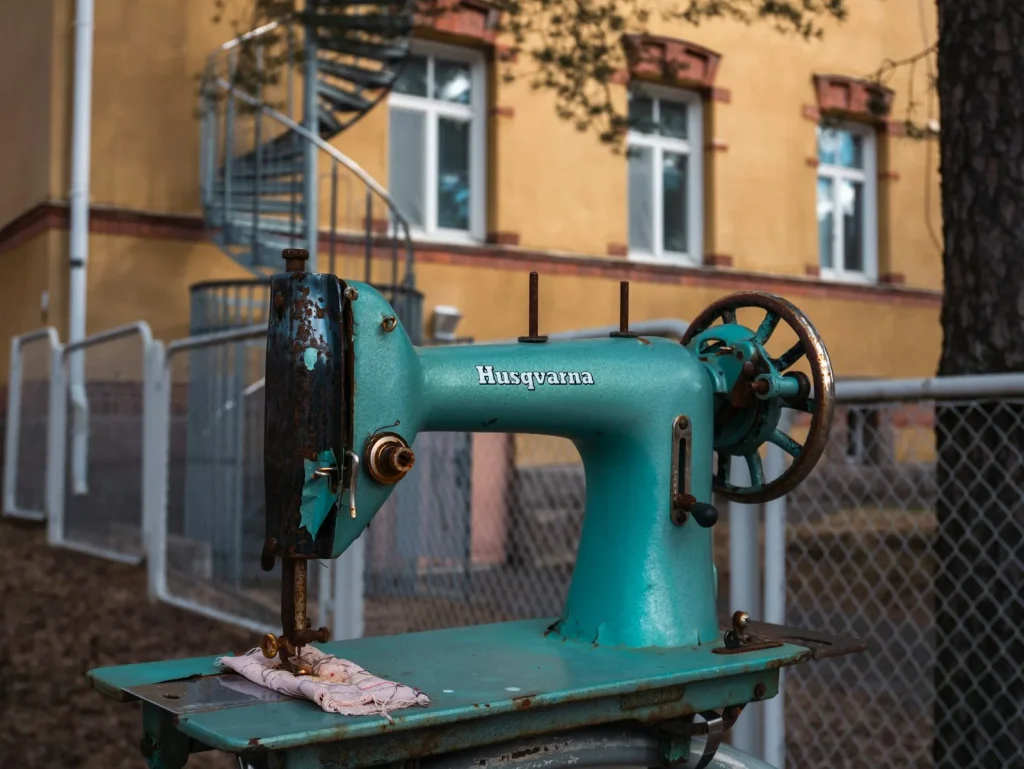
A screw or shaft that will not turn at all wants penetrating oil, not force. Apply it, let it sit a full day, and apply it again. Try a small turn, just a few degrees, once every day rather than one hard twist.
Most frozen hardware frees up somewhere between three and seven days on this rhythm. A screw head that starts to round off under the screwdriver has already lost the fight, so stop there and drill it out instead of stripping the slot completely.
Do not force it
A seized screw or shaft wants oil and time, not muscle. Forcing it past its resistance is the fastest way to snap a screw head off or shear a shaft, turning a soak and wait job into a drilling job or a search for a replacement part.
Small Parts Bad Enough to Come Off the Machine
A chelating rust remover such as Evapo-Rust is the right call only for small hardware removed entirely from the machine: screws, brackets, thumbscrews. Submerge the part, check it hourly, and expect anywhere from one to eight hours depending on how deep the rust runs.
Rinse and dry the part within minutes of pulling it out, then oil it right away. Bare steel stripped this clean starts forming new bloom within an hour in ordinary room humidity, so the bath is not the last step, the oil after it is.
What Rust Removal Should Never Touch
Two boundaries keep a rust repair from costing more than the rust itself ever would.
Paint and decals never meet an abrasive, not even the softest 0000 steel wool. A painted body panel or a gold decal gets oil on a cloth only, no matter how stubborn a fleck of rust looks against it.
Watch out
Steel wool, a brass brush, and sandpaper are off limits on any painted or decal surface. Oil and a soft cloth are the only tools allowed there, even for a rust fleck that refuses to budge.
The hook and race are precision surfaces, not just metal that needs to look clean. Thread rides against them thousands of times in a single project, so any material removed changes the fit. Unplug the machine before removing the needle plate or bobbin case to reach either one, then treat them the same as any bright metal part: oil and 0000 steel wool, never a rotary tool or a wire wheel.
I have watched a rotary tool turn a 40 dollar rust problem into a 200 dollar problem more than once. A hook polished with oil and steel wool still times correctly afterward. A hook ground bright and fast with a wire wheel usually comes out a hair narrower than it started, and a hair is enough to throw the timing off and force a full part replacement anyway.
Needles, springs, and the bobbin case fall into a different category: replace them rather than restore them. A full set runs somewhere between 2 and 25 dollars, and a pitted spring surface, even one cleaned to a shine, still catches and shreds thread on every pass. That roughness does not go away with a wipe of oil.
Rust Damage at a Glance
Use this as a quick reference once the type of rust is clear.
| Rust stage | Looks like | Treatment | Realistic outcome |
|---|---|---|---|
| Surface bloom | Fine orange dust on bare steel that transfers onto a cloth | Sewing machine oil worked in with a soft cloth | Full recovery, metal underneath is sound |
| Pitting | Gray craters left once the bloom is wiped away | Oil and 0000 steel wool for function, careful polishing on the hook or race | Function returns fully, cosmetic scarring stays visible |
| Frozen or seized | A screw, shaft, or hinge pin that will not move at all | Penetrating oil soak over 3 to 7 days, a few degrees of movement daily | Usually frees up, an occasional stripped screw needs drilling out |
| Heavily rusted small parts | Screws, brackets, or thumbscrews coated thick and removed from the machine | A chelating bath for 1 to 8 hours, rinsed and oiled within minutes | Clean bare metal that must be dried and oiled fast or bloom returns within the hour |
Keeping It From Coming Back
Removing rust without changing the habits that caused it just buys time before the next round.
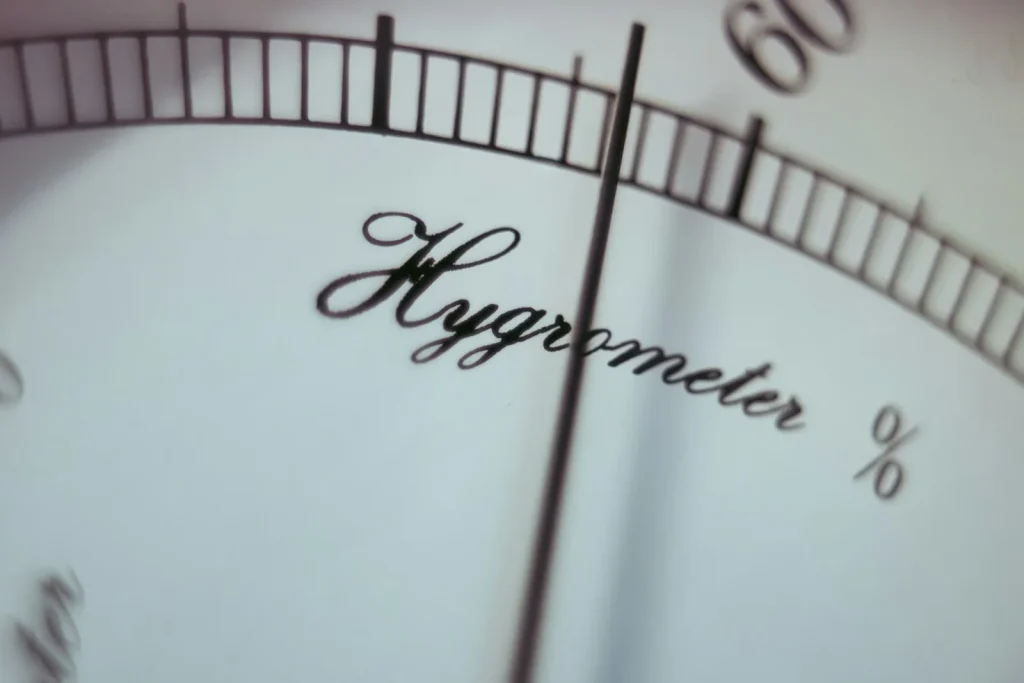
Steel starts rusting in earnest once relative humidity climbs above 60 percent, and a small hygrometer left in the closet or sewing room for a week settles whether that space is a risk zone or a safe one. A garage, shed, or unheated porch swings past that number on an ordinary humid day, which makes any of them a poor home for a machine with exposed steel parts.
A silica gel packet tucked into a hard case or a cabinet drawer soaks up ambient moisture between sewing sessions. It matters most in a humid climate or a house near the coast, where salt air speeds up corrosion beyond what humidity alone would cause.
Oil itself is armor, not just lubrication. A light wipe of exposed metal with an oiled cloth after a humid day of sewing, thirty seconds at most, leaves a film that blocks moisture from reaching bare steel until the next session.
- Keep the sewing room or closet under 60 percent relative humidity, checked with a small hygrometer.
- Store machines away from the garage, shed, or an unheated porch, where humidity swings hit hardest.
- Tuck a silica gel packet into the case or cabinet and refresh it each season.
- Wipe exposed metal with an oiled cloth after a humid or coastal sewing session.
- Test every screw and shaft for stiffness at each cleaning, since a light drag today is a soak project next year.
- Strip, dry, and oil a soaked or flooded machine within 48 hours.
The 48-Hour Window After a Flood
A burst pipe, a flooded basement, or a machine caught anywhere near standing water starts a countdown the moment it happens.
Strip the machine down as soon as it is safe to do so: plate off, bobbin case out, anything else that can trap water removed. Dry every surface completely with a fan and open air rather than direct heat strong enough to warp plastic housings.
Oil every exposed metal surface before the 48-hour mark passes. That window is roughly how long wet, unprotected steel sits before bloom starts forming in typical indoor humidity, and a machine oiled inside it usually needs nothing more than a wipe down, while one left wet past that point is back to the removal ladder above.
The Auction Machine, a Week of Evenings
That 40 dollar cabinet machine turned out to be mostly bloom once the grime came off. The bed, the shafts, and the handwheel rim all cleared with oil and a cloth inside the first evening.
Only two spots turned out to be real problems. The handwheel retaining screw would not move a fraction of a turn, so it got a coat of penetrating oil every evening for five days straight, a small turn attempted each time, before it finally broke free on day six without ever needing force.
The bobbin case had pitted badly enough that no amount of cleaning would make its spring trustworthy again, so it went in the trash and a 12 dollar replacement went in its place. Everything else on that machine, the hook, the race, the shafts, cleaned up with oil, 0000 steel wool, and patience spread across a handful of evenings.
By the end of the week the machine ran quiet and sewed a straight seam on the first try. Whether it was a bargain or a boat anchor came down to that one stubborn screw and the choice to wait it out instead of reaching for a bigger wrench.
Most rust on a sewing machine is less serious than it first looks. A bed freckled orange at a flea market or an auction is very often a bloom problem, solved with oil, a cloth, and maybe a pad of 0000 steel wool over one evening.
Save the patience for the parts that actually need it. A seized screw wants days, not minutes, and a hook or race wants a light touch, never a grinder, since either shortcut turns a cheap fix into a parts hunt.
Check humidity in whatever room holds a machine between projects, keep an oiled cloth within reach during a humid stretch of sewing, and treat any flood or spill like a countdown instead of a chore for next weekend. That combination is what kept one 40 dollar auction gamble from turning into a parts donor, and it works just as well on a machine that never left the house.
Frequently asked questions
Can rust be removed completely from a sewing machine?
Surface bloom, the fine orange dust on bare metal, wipes off completely with oil and a cloth or a pass of 0000 steel wool. Pitting is different: function returns once the rust is gone, but the small craters it left behind stay visible under close light. Seized parts usually free up with a multi-day oil soak, though a small number end up needing a replacement part instead.
Is steel wool safe to use on a sewing machine?
Only the finest 0000 grade, and only with sewing machine oil worked in first. Dry steel wool scratches bare metal and sheds fine fibers that stick to anything magnetic inside the machine. Keep it away from painted surfaces and decals entirely, since even that fine a grade dulls paint on contact.
What do I do about a screw or shaft that will not turn at all?
Apply penetrating oil, wait a full day, and apply it again rather than reaching for a bigger screwdriver. Attempt a small turn, just a few degrees, once every day, and most frozen hardware frees up somewhere between three and seven days. Forcing it risks snapping the screw head off or shearing the shaft, which turns a patience problem into a parts hunt.
How long do I have to save a machine after a flood or a spill?
About 48 hours before bloom starts forming on wet, unprotected steel in normal indoor humidity. Strip the machine down, dry every surface completely, and oil the bare metal before that window closes. A machine treated inside 48 hours usually needs nothing more than a wipe down, while one left wet longer is back to a full rust removal job.
How do I stop rust from coming back once it is gone?
Keep the room the machine lives in under 60 percent relative humidity, checked with a small hygrometer, and skip garages, sheds, and unheated porches entirely. A silica gel packet in the case and a light oiled wipe after humid sewing sessions handle the rest, since a thin oil film blocks moisture from ever reaching bare steel.

Amit Sisodia
Amit Sisodia is a longtime sewing enthusiast and hobbyist repair tinkerer who has spent years diagnosing tension quirks, jammed bobbins, and stubborn feed dogs across everything from vintage treadle Singers to modern computerized machines. He writes practical, tested guides for BobbinWise so home sewists can spot problems early, tackle safe repairs themselves, and know when it's smarter to call in a technician.


