Key takeaways
- Cleaning and oiling before storage matters more than the cover you choose, because lint left in place holds moisture against bare steel.
- Sealed plastic bags trap condensation and rust a hook race faster than open air ever will, so wrap a stored machine in breathable cotton instead.
- A quarter turn loosening the presser foot spring keeps it from taking a permanent set during months of sitting unused.
- Stable relative humidity between 40 and 60 percent protects a machine better than any cover, and a ten dollar hygrometer proves whether a closet qualifies.
- A machine that sat for a year needs a slow unthreaded test run and a fresh needle before it touches real fabric again.
The machine comes down off the closet shelf on a Tuesday night in early December, because the kids need matching pajama pants by the weekend and there is no time to think about anything except thread color.
Whether the next hour goes smoothly, or turns into a fight with a gummed up hook race, was decided months earlier, the day this machine went up on that shelf instead of staying out on the table.
A machine cleaned, oiled, and wrapped properly threads on the first try. One pushed into a closet dusty and still threaded spends its first twenty minutes back fighting a problem a five minute habit would have prevented.
Why Storage Wrecks More Machines Than Sewing Does
Ask a repair shop what breaks the machines that come in for service, and skipped stitches are not the top answer. Storage is. A machine sitting idle collects three enemies at once: dust that turns into lint, oil that dries into varnish, and moisture that turns bare steel into rust.
None of that shows up while the machine runs. It builds during the weeks and months it sits still, which is why a weekend between quilting projects and a winter in a closet ask for very different amounts of care.
Between Projects: Days to a Few Weeks
This is the storage that happens most often and gets skipped most often too, because the machine is coming back out soon enough that any prep feels unnecessary.
Drop the dust cover over it anyway. Dust sitting on an idle machine is lint in progress, and every particle that lands on top eventually works its way down into the hook race through the needle plate opening.
Leave the needle down through a folded scrap of fabric, or remove it if the machine will sit more than a week or two. Unplug it as well, and coil the cord loosely rather than leaving it kinked under tension against a table edge.
The pedal cord deserves the same care and rarely gets it. Wrapping it tightly around the pedal works the wire against a sharp edge at the strain relief, and the copper conductors inside can break from that repeated flexing even while the insulation still looks fine. A pedal that worked yesterday and does nothing today traces back to this more often than a bad foot control.
Seasonal Storage: A Few Months in the Closet
A machine going away for a season, between quilting shows or over a summer when the sewing room turns into a guest room, needs real preparation, not just a cover.
Clean and oil the machine before it goes into storage, not after it comes back out. Lint left inside the hook race holds moisture against bare steel for months, exactly the setup rust wants, while going in dry lets the residual oil already in the felt pads and wicks oxidize into a sticky varnish instead.
Oil first, then clean, then add one more light coat to the moving points before the cover goes on. That last light coat is what survives the months ahead.
If the machine carries a removable memory battery, common on computerized models built in the last fifteen years, take it out before a stretch of several months. A leaking button cell corrodes circuit board traces that cost far more to repair than the 2 USD battery itself.
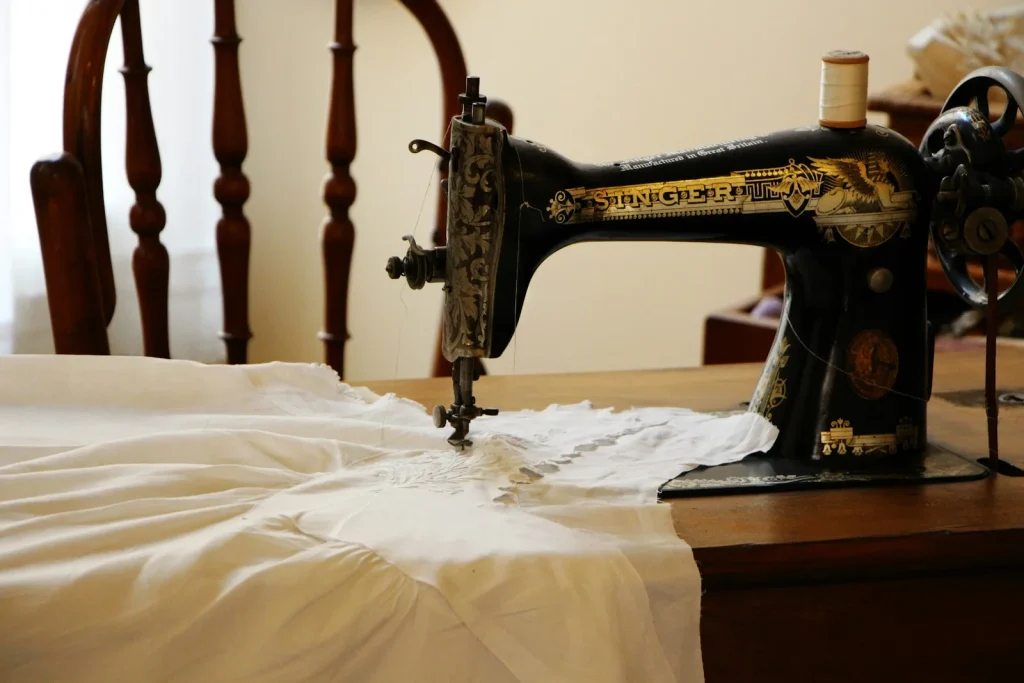
Machines with an adjustable presser foot spring, the small thumb screw near the presser bar on many mechanical Singers and Berninas, benefit from a quarter turn counterclockwise before a long rest, since a spring left under full tension for months can take a permanent set. Store the covered machine off the floor too. Basement and garage level shelves sit in the coolest, dampest air in the room.
Long Term Storage: A Year or Longer
A machine going into storage for a year or more, an inheritance waiting on a new owner, a backup machine, a hobby on hold, earns the full routine.
Clean it completely first: lint out of the hook race and feed dogs, old oil wiped from every point the manual marks. Then oil every one of those points properly, run the machine two full minutes unthreaded so the oil works into the moving parts, and wipe away whatever weeps back out.
Remove the needle, since even indoors a year is long enough for surface rust to form on an unprotected tip and snag the first stitch back. Wrap the machine in breathable cotton, an old pillowcase, a flannel sheet, or a cotton dust cover. Never sealed plastic.
Watch out
A sealed plastic bag feels protective, but it works against a machine over a long rest. Temperature swings between day and night pull moisture out of the trapped air and deposit it back onto the machine as condensation, over and over. Breathable cotton lets that humidity pass through instead of pooling against the metal, which is why open cotton beats sealed plastic every time.
Why Climate Beats Every Other Factor
Where the machine actually sits matters more than the cover or the oil. An attic can swing from 40 to 120 degrees Fahrenheit across a single year, and a garage swings just as hard on humidity, pushing a stored machine through repeated cycles of expansion, contraction, and condensation.
A closet inside the living space, heated and cooled the same as the rest of the house, wins every time. Aim for something close to 40 to 60 percent relative humidity and a temperature that holds steady across a season. A small hygrometer, about 10 USD at any hardware store, settles the question for a specific closet instead of guessing.
From the bench
A Bernina 830 came in with a hook race rusted solid enough that the bobbin case would not seat, after one humid summer in an attic sealed inside its original plastic cover. The owner had cleaned, oiled, and removed the needle first, everything right except the cover and the room. Freeing the race, replacing two corroded screws, and retiming the hook ran a 130 USD bill for damage a bedroom closet would have prevented entirely.
Storage Duration at a Glance
Here is the same guidance condensed into one table for quick reference.
| Storage length | Do this before it sits | Biggest risk if skipped |
|---|---|---|
| Days to a few weeks, between projects | Dust cover on, needle down or removed, cord unplugged and coiled loosely | Dust settling into the hook race as lint |
| A few months, seasonal | Clean and oil first, remove any backup battery, loosen the presser foot spring, store off the floor | Lint holding moisture against bare steel |
| A year or more, long term | Full clean and oil, run 2 minutes unthreaded, remove the needle, wrap in breathable cotton, control the climate | Varnished oil and a rusted hook race |
Choosing a Cover: Hard Case, Soft Cover, or Original Box
The right cover depends on where the machine is going and for how long. A molded hard case gives the best physical protection for a machine that travels to classes or guild meetings, though it does not breathe well, so tuck a silica gel packet inside near the machine body.
A soft quilted or vinyl dust cover breathes better than any hard case and suits a machine that lives on a table between projects or sits in a closet for a season, though it offers no protection against a fall.
The original cardboard box with its molded foam inserts is excellent for shipping a machine or moving house, but a poor choice for storage past a year in anything but a climate controlled room, since cardboard itself absorbs ambient moisture and holds it against the machine.
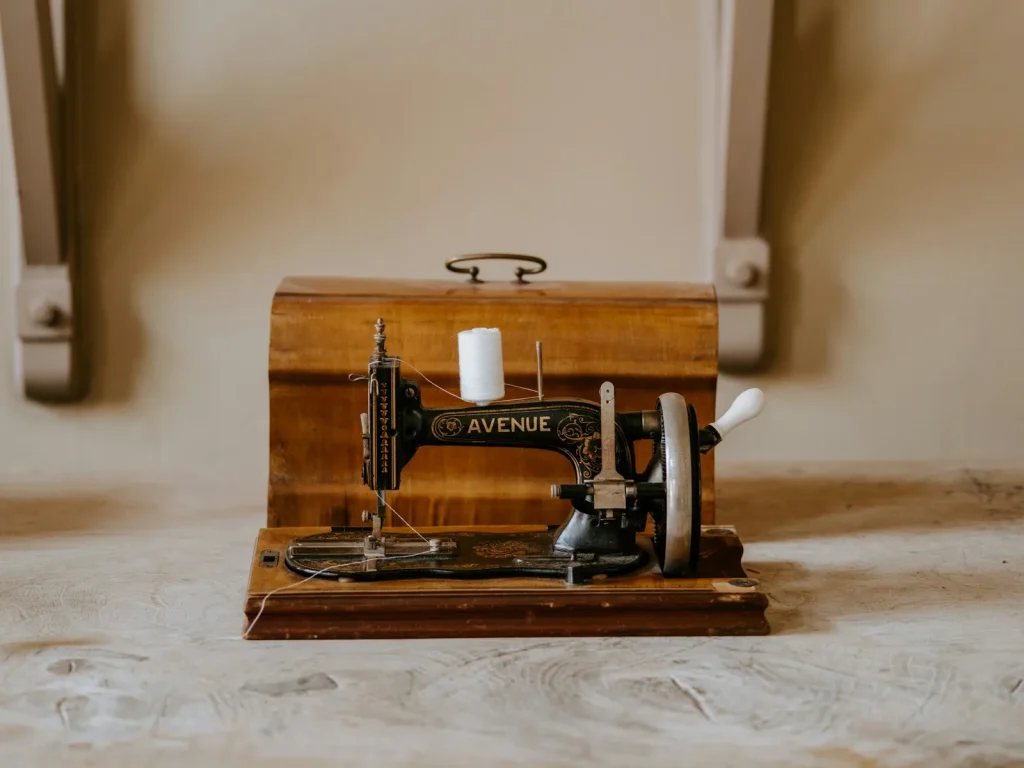
Bringing a Stored Machine Back to Life
The minutes before the first stitch matter as much as anything that happened while the machine sat. Do not thread it and start sewing. Work through a short routine first, every time, no matter how good the machine looks.
- Wipe the exterior and open areas for dust.
- Turn the handwheel by hand a full rotation, feeling for any grinding, stiffness, or catch point.
- Add a fresh drop of oil at each point the manual marks.
- Run the machine unthreaded for two minutes at a slow, steady speed, listening for anything unusual.
- Install a fresh 80/12 universal needle rather than trusting one that has been sitting.
- Thread it and test on a folded scrap of the actual project fabric before committing to a real seam.
A machine that passes all six steps is ready for real work. One that grinds, catches, or sews a rough test seam needs another look before good fabric goes under the needle, not after.
None of this takes long. Cleaning and oiling before a machine goes away runs 10 to 15 minutes, and wrapping it properly with a stable spot to keep it takes another five, cheap insurance against a 130 USD rusted hook race bill.
Match the routine to the timeline: a weekend between projects needs a cover and an unplugged cord, a season needs cleaning and oil, and a year or more needs the full treatment with climate control and a real check before the first stitch back. The machine that comes off the shelf ready to sew earned that readiness in the minutes before it went up there.
Frequently asked questions
How long can a sewing machine sit before it needs more than just a dust cover?
A couple of weeks is fine with just a cover, a folded scrap under the needle, and an unplugged, loosely coiled cord. Once the timeline stretches past a month or so, clean and oil the machine first, because lint left in place starts holding moisture against bare steel. Treat anything past about a year as long term storage and add climate control and a breathable wrap to the routine.
Is it bad to store a sewing machine in an attic or a garage?
Both are risky compared to a closet inside the living space. Attics can swing from around 40 to 120 degrees Fahrenheit across a year, and garages swing just as hard on humidity, and those repeated swings drive the condensation that causes rust. A closet held at a stable temperature and 40 to 60 percent relative humidity protects a machine far better than either space.
Should I remove the needle before storing a sewing machine?
For anything under a few weeks, leaving it down through a folded fabric scrap is fine. For a season or longer, remove it, because even a light surface rust on the tip is enough to snag fabric on the first stitch back. A fresh needle at the revival stage is cheap insurance either way.
Can I store a sewing machine long term in its original cardboard box?
It works well for shipping or a short move, but it is a poor choice for storage past a year unless the room is fully climate controlled. Cardboard absorbs ambient moisture and holds it against the machine instead of letting it pass through. A breathable cotton wrap inside a stable closet protects better for anything beyond a few months.
What should I do the first time I use a sewing machine after long term storage?
Wipe it down, turn the handwheel by hand to feel for any stiffness, and add a fresh drop of oil at each point the manual marks. Run it unthreaded for about two minutes at a slow speed, listening for anything unusual, then install a fresh needle. Thread it and test on a folded fabric scrap before starting the actual project.

Amit Sisodia
Amit Sisodia is a longtime sewing enthusiast and hobbyist repair tinkerer who has spent years diagnosing tension quirks, jammed bobbins, and stubborn feed dogs across everything from vintage treadle Singers to modern computerized machines. He writes practical, tested guides for BobbinWise so home sewists can spot problems early, tackle safe repairs themselves, and know when it's smarter to call in a technician.