Key takeaways
- Every one of the roughly 15 oiling points on a Featherweight 221 needs a drop of oil after every 8-10 hours of sewing.
- The motor runs on grease inside two small tubes, and putting oil in those tubes is the most common way owners ruin a healthy motor.
- Class 221 bobbins do not interchange with the common class 15 bobbin, so keep several correct spares on hand at $8-12 a set.
- Original 70-90 year old wiring cracks with age, and a $75-150 professional rewire is the best safety investment an owner can make.
- A clean sewing condition Featherweight typically sells for $250-500, and keeping every original part in a labeled bag protects that value.
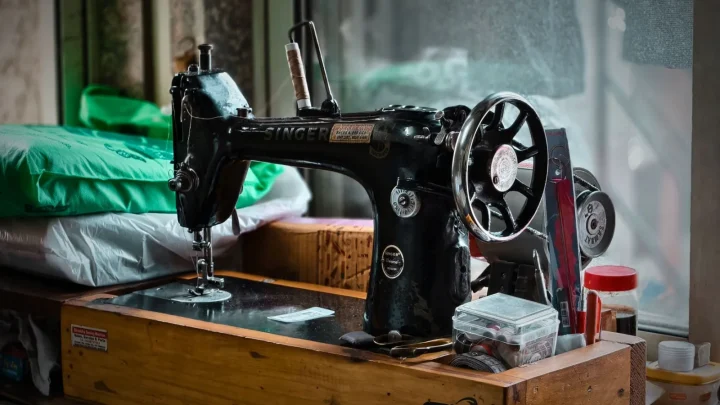
The case comes down off a closet shelf during a move or a cleanout, black and boxy and heavier than it looks. Inside sits seven pounds of 1940s engineering, still faintly smelling of oil.
It was a grandmother’s. It still runs.
That moment, not a purchase at a shop, is how most people become Singer Featherweight 221 owners. The machine has already outlived one household and is asking to outlive another, and it will, provided the next owner gets four things right: oil, grease, decals, and wiring.
None of that is complicated. A Featherweight that gets the wrong kind of care does not throw an error code, it just quietly starts to fail.
A Fully Oiled Machine, By Design
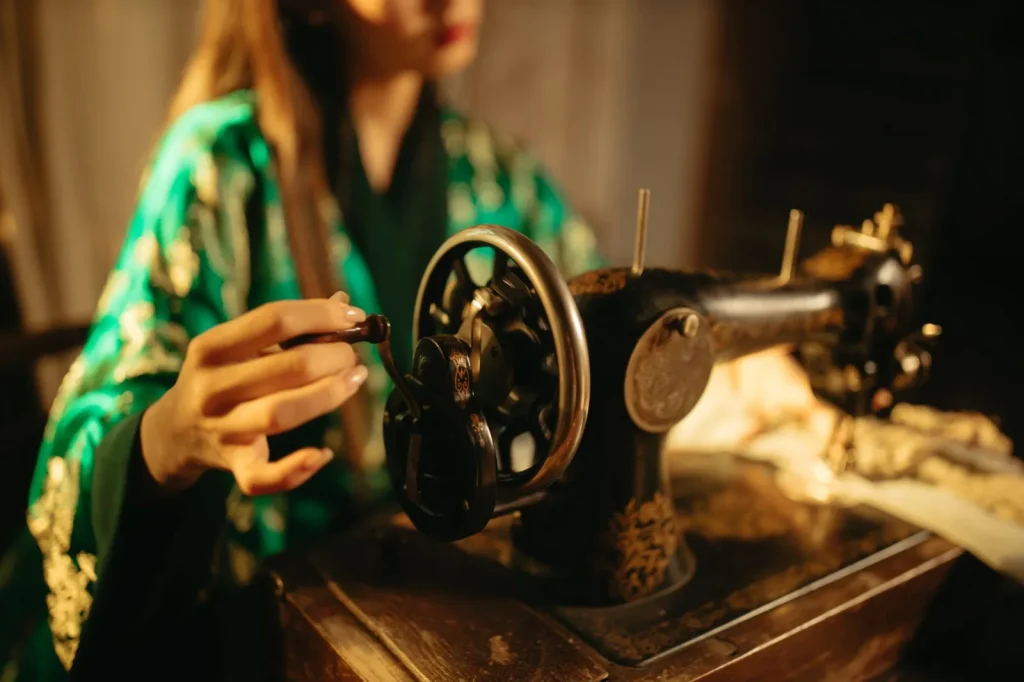
Singer built the 221 as a fully oiled machine: the mechanism runs on liquid oil, not the sealed lubrication used in machines made after the 1970s. Every moving joint, from the hand wheel bushing to the feed dog linkage, has an oiling hole drilled straight to it.
The manual’s diagram marks roughly 15 points across the top and underneath the bed plate. Each gets one drop of good quality sewing machine oil, never household oil or a penetrating spray, after every 8-10 hours of sewing.
A machine sewn a few hours a week does fine oiled every 2-3 weeks. A machine coming out of storage needs a full round at every point before its first stitch, since oil dries out between uses.
| Location | Lubricant | How often |
|---|---|---|
| Hand wheel and balance wheel | Sewing machine oil | Every 8-10 hours |
| Needle bar and presser bar | Sewing machine oil | Every 8-10 hours |
| Feed dog linkage, under the bed | Sewing machine oil | Every 8-10 hours |
| Hook race and bobbin driver | Sewing machine oil, light film | Every 8-10 hours |
| Motor bearings, inside grease tubes | Singer motor lubricant, never oil | Once or twice a year |
| Belt and motor mount | No lubricant, keep dry | Check every few months |
The Motor: Grease, Never Oil, and Belt Tension
The one exception to all that oiling sits inside the motor housing. Two small grease tubes on the motor casing feed grease to felt wicks packed around the bearings, and those wicks want Singer motor lubricant, applied once or twice a year, never oil.
Oil dripped into a grease tube thins the grease and breaks down the felt wick until it stops holding lubricant against the bearing. The motor keeps spinning on almost nothing, the bearing wears, and a six dollar tube of grease could have prevented the whole rebuild.
Watch out
Never put sewing machine oil in the motor’s grease tubes. Oil breaks down the felt wicks that hold grease against the bearings, and that single mix-up is the most common way a healthy Featherweight motor gets ruined.
The same motor drives the hand wheel through a small rubber belt, and tension comes entirely from how the motor sits bolted to its mount, not a separate tensioner. Loosen the mount screw, pivot the motor slightly, and retighten until the belt gives about a half inch under a finger press.
Too loose and it slips under thick seams. Too tight and it strains the bearings. A cracked or glazed belt is a cheap swap, and a modern reproduction beats hunting down a 70 year old original.
Class 221 Bobbins, Not Class 15
Featherweight machines take a class 221 bobbin, sized differently from the far more common class 15 bobbin sold at most fabric stores. New owners regularly buy the wrong one without noticing.
A class 15 bobbin sits loose in a Featherweight’s case and usually shows up fast as skipped stitches or nested thread underneath the fabric. Class 221 bobbins run about $8-12 for a set, sold by Featherweight specialists and vintage machine dealers.
Keep at least 4 or 5 correct spares in the case’s accessory box. Running low mid project and grabbing whatever bobbin is closest is the fastest way back to this same problem.
The Shellac Finish and the Gold Decals
The black finish on a Featherweight is shellac, not baked enamel, and the gold scrollwork decals sit on top under a clear coat thinned by age. Both are more fragile than they look.
Alcohol, including glass cleaner and hand sanitizer residue on fingers, softens shellac and lifts decal edges within seconds. Most modern all purpose cleaners do the same.
Clean the case with a soft cloth barely dampened with sewing machine oil, buffed dry right after. That single method handles dust, fingerprints, and years of haze without ever touching the decals directly.
Watch out
Keep alcohol, glass cleaner, and any solvent based polish away from the shellac finish and decals entirely. A few seconds of contact can soften the finish and lift gold scrollwork that Singer stopped being able to reproduce exactly decades ago.
The Wiring Question You Cannot Skip
Every Featherweight owner eventually has to face the wiring. These machines are 70-90 years old, and the original cloth covered insulation dries out, cracks, and exposes bare copper underneath.
A cracked cord that still works is not a safety feature, it is a fire risk waiting for a fraying spot to touch the machine’s metal frame. This is the one place where originality should lose to safety without argument.
Unplug the machine before opening the motor cover to inspect the cord or the grease tubes, and stop sewing on any cord showing cracking or bare wire. A specialist can rewire the cord, foot pedal cable, and motor leads for about $75-150, keeping the original bakelite plugs intact on the outside.
That $75-150 is the single best investment an owner can make in a Featherweight that actually sews, ahead of a new belt or any cosmetic detail pass. Machines kept as display pieces can wait. Machines that sew every week cannot.
Value, Originality, and the Case It Lives In
What These Machines Are Worth
A Featherweight 221 in clean sewing condition, with its case, typically sells for $250-500 depending on region and market. Festival colored machines and rare variants like the black 222K free arm bring considerably more, sometimes into four figures.
Originality drives a large share of that price. A machine with correct period accessories and unmodified parts is worth meaningfully more than an identical one carrying mismatched or reproduction parts.
Put every original part you replace, the old belt, the old bobbin case, the old wiring, into a labeled bag inside the case. A future owner or a future sale benefits from that bag more than from almost any single repair.
A machine came into a shop not long ago carrying four generations of the same family’s sewing, still in its case, with a receipt from a Singer dealer dated 1947 tucked into the side pocket. The great granddaughter bringing it in did not know it was there until she cleaned out the pocket the night before.
That receipt will not sew a straighter stitch, but it makes the machine worth a good deal more to a collector, and it turned a routine service visit into a story worth another 80 years. Whatever paperwork came with a machine belongs inside that case.
The Case and That Smell
Featherweight cases are covered in tolex, a vinyl coated fabric that can develop a musty smell after decades in a closet or damp basement. The smell usually lives in the lining and foam padding, not the machine itself.
Wipe the case’s interior lining with a cloth barely dampened in a mild vinegar and water solution, then let the case air out open, away from direct sun, for a few days. A container of baking soda left inside overnight helps with anything that lingers.
A case that stays bad after that is usually dealing with mildew inside the foam, and relining or replacing it makes more sense than continuing to fight the smell. A machine’s value rides mostly on the machine, not the case’s cosmetic condition.
An Annual Routine for a Machine That Sews Weekly
A Featherweight sewn a few hours a week settles into a simple annual rhythm layered on top of the every 8-10 hour oiling. Once a year, run through a fuller check that regular oiling alone does not catch.
- Oil all 15 points on the manual diagram
- Open the motor’s grease tubes and add lubricant if it has been over a year
- Check belt tension for a half inch of finger deflection
- Inspect the cord and plug for cracked insulation or bare wire
- Clean the shellac finish with an oil dampened cloth only
- Confirm bobbins in use are class 221 and restock spares under 3 or 4
- Air out the case and check the lining for new mustiness
- Note any original parts stored alongside the machine
None of this takes more than an evening, and doing it once a year catches a fraying cord or a glazed belt before it becomes a repair that takes the machine off the table for weeks.
A Singer Featherweight 221 does not ask for much, which is a large part of why so many are still sewing 80 and 90 years after leaving the factory. Oil at the right points, grease instead of oil at the motor, a belt set by feel, and a cord replaced before it becomes a hazard cover nearly everything the machine needs.
Open the case today if it has not been oiled this season. Fifteen drops of oil and a few minutes of attention are a small price for a machine that has already earned three or four generations of trust.
Frequently asked questions
How often should I oil a Singer Featherweight 221?
Put a single drop of sewing machine oil at each of the roughly 15 marked points every 8-10 hours of sewing. A machine used a few hours a week usually lands on an oiling session every 2-3 weeks, and a machine coming out of storage needs a full oiling before its first stitch.
Can I put regular sewing machine oil in the motor?
No. The motor bearings run on grease fed through two small tubes on the motor housing, and oil breaks down the felt wicks that hold that grease in place. Use Singer motor lubricant or an equivalent lithium based grease once or twice a year instead.
Why won't a class 15 bobbin fit my Featherweight?
The Featherweight 221 takes a class 221 bobbin, sized differently from the class 15 bobbin sold at most fabric and craft stores. A class 15 bobbin sits loose or crooked in the case and usually causes skipped stitches or thread nests within a few minutes of sewing.
Does my Featherweight really need to be rewired?
If the cord still has its original cloth covered insulation, almost certainly yes. That insulation is 70-90 years old at this point, and cracked insulation near a metal frame is a real fire risk, not just a cosmetic issue. A specialist rewire runs about $75-150 and keeps the original plugs and housing intact.
What determines how much a Featherweight is worth?
Condition, originality, and rarity drive the price. A clean sewing condition machine with its case typically brings $250-500, while festival colored machines and rare variants like the 222K free arm can sell for well above that range, especially with original accessories and paperwork.

Amit Sisodia
Amit Sisodia is a longtime sewing enthusiast and hobbyist repair tinkerer who has spent years diagnosing tension quirks, jammed bobbins, and stubborn feed dogs across everything from vintage treadle Singers to modern computerized machines. He writes practical, tested guides for BobbinWise so home sewists can spot problems early, tackle safe repairs themselves, and know when it's smarter to call in a technician.