Key takeaways
- Look up the model number and ask if the machine sews today before you ever agree to see it in person.
- A stiff handwheel is negotiable, but grinding, grit, or a dead stop means you should walk away.
- Bring your own needles, thread, and a wound bobbin, since a seller's setup can hide a machine's real problems.
- Price the machine as its working value minus every visible repair it needs, then open below that number.
- Plastic confetti in the base pan or a burning smell from the motor ends the visit at any price.
The folding table sagged under a beige machine with a strip of masking tape across the front, reading $60 OBO in blue pen. A woman I had never met stood behind it with her arms crossed, waiting to see whether I actually knew what I was looking at.
In one pocket I carried a scrap of medium weight cotton folded into quarters. In the other, two needles still sealed in their paper sleeves, an 80/12 and a 90/14. That was the entire kit, and it was enough to answer the only question that mattered in the next ten minutes.
The used sewing machine market is where the best deals live and where the worst disasters hide, often on the same folding table. A photo online never tells you which one is in front of you. Ten minutes of hands on testing does.
What follows is the protocol I run on every used machine, in order: the questions before you ever get in the car, the checks once you are standing at the table, and the short list of problems that end a visit on the spot.
Get the Model Number, Then Ask Two Questions
Every used listing should give up its model number before you agree to see it in person. A Singer 15-91 and a 1990s plastic gear Kenmore can photograph almost the same way, yet they are not the same machine to own.
That number tells you the era and the build, metal gears or nylon, belt driven or an internal cam stack. Machines from the 1950s through the 1970s tend to run for decades, while a mid 1990s budget machine with plastic gears has a documented failure point: a specific grinding noise later on.
Ask why it is being sold. Downsizing, or inherited it and nobody here sews, are ordinary answers. A vague or shifting one is worth noticing before you drive anywhere.
Then ask what actually matters: does it sew right now, today. It worked when we put it away is not a yes. It means nobody has tested it in years, so price it as untested, not as working.
The Ten Minute Protocol at the Table
Once you are standing in front of the machine, the order of operations matters: each step either confirms what the last one showed you, or gives a clean reason to stop early.
The Visual Sweep
Before touching a dial, look. Check the needle bar and hook race for rust: orange dust means the machine sat somewhere damp, and rust inside the race can pit the metal enough to throw off timing.
Check the bed edges for crash damage too: dents, a bent throat plate, or paint chips in a straight line rather than general wear, a sign the machine was dropped or something hard was run over under the needle.
Missing covers, especially the belt cover, are a quiet warning sign. People rarely remove a cover and lose it. They remove one to fix something and never finish the job.
The Handwheel Test
Turn the handwheel toward you by hand for one full revolution. Stiffness alone is not a problem. Old, thickened oil makes a handwheel feel heavy, and a few oiling sessions at home almost always free it up within a day.
Grinding is different. Any scrape, catch, or grit you feel through your fingers means metal is contacting metal where it should not, and a dead stop partway through the turn points to a broken part or a jammed hook.
Stiff is negotiable. Grinding is not. That single distinction decides more used machine purchases than anything else on this list.
The Power Test
Plug the machine in only after the visual and handwheel checks pass, then run it from the slowest speed up to full speed, listening the whole time. A healthy motor hums evenly, while a failing one whines, surges, or slows even under no load.
Smell for anything burning, even faintly. A hot electrical smell usually means worn brushes or windings breaking down inside the motor, and either repair often costs more than a used machine is worth.
Watch the foot pedal too: it should ramp up smoothly, not lurch or cut out. If the seller wants to pop a cover to show the motor, have them unplug the machine first.
Sew on It Yourself, With Your Own Kit
This is the step people skip, and it is the one that actually proves anything. Never trust a seller’s thread, needle, or bobbin. A dull needle, a mismatched bobbin class, or sun faded thread can make a good machine sew badly, or a worn machine sew just well enough to fool you.
Carry the same small kit to every visit:
- Two fresh needles: an 80/12 for quilting cotton and a 90/14 for something heavier
- Two spools of contrasting thread, so top and bottom tension are easy to tell apart
- A bobbin wound yourself, in the class that matches the machine you looked up
- Two scraps of fabric, one medium weight and one heavier
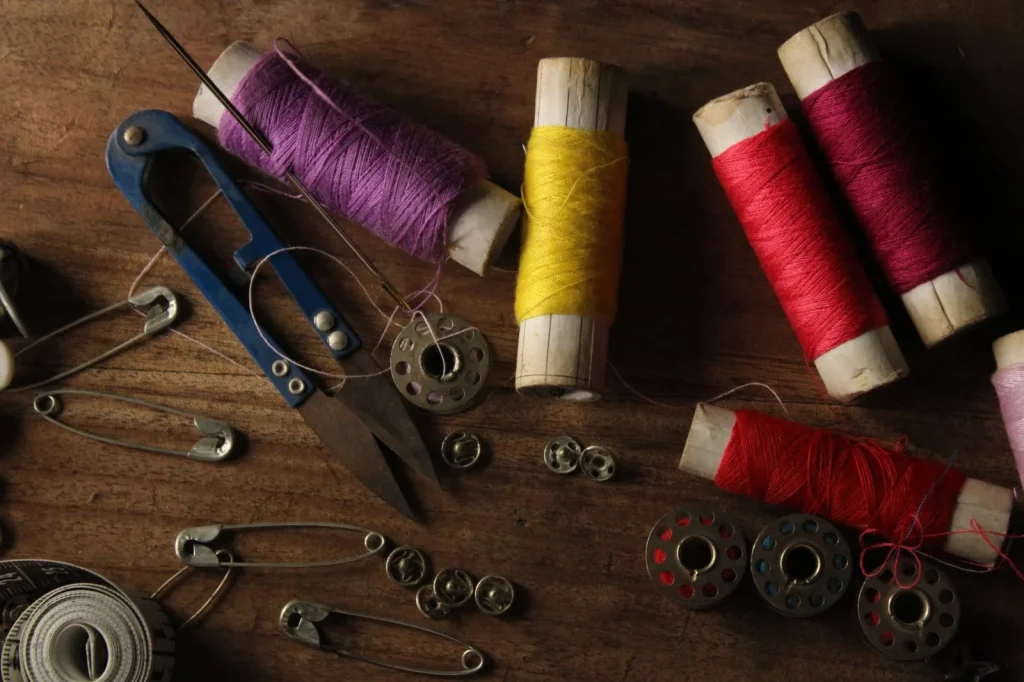
Bring your own bobbin
A seller’s pre wound bobbin can hide a machine’s real tension problems, either by luck or by a dial nudged just before you arrived. Wind your own at home, in the class that matches the machine’s hook, and bring it in a labeled tin.
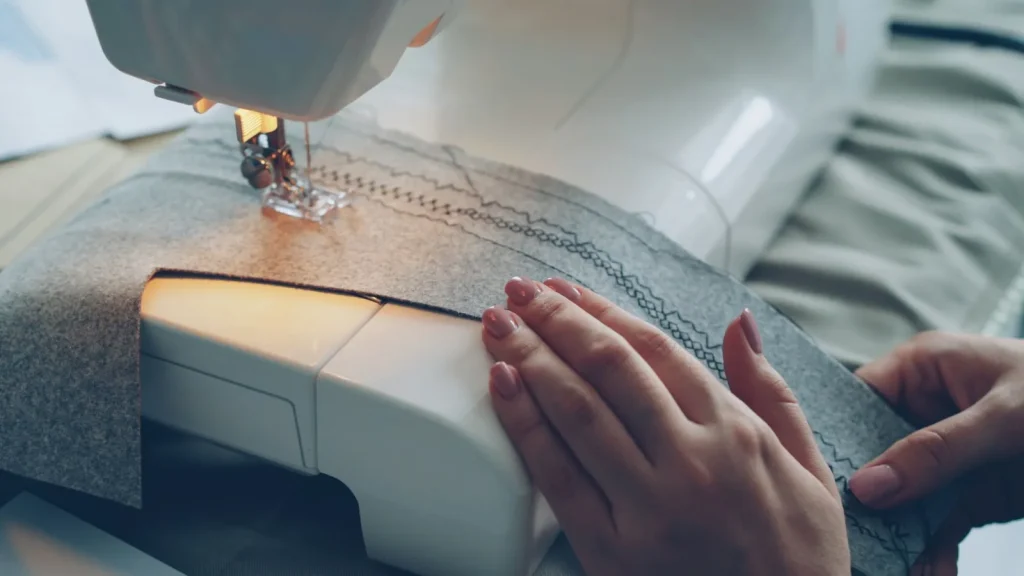
Sew a straight seam forward, then reverse back over the same line. Switch to zigzag if the machine has one. Flip the seams over and check the underside: even stitches with no loops of bobbin thread pulled up top, and no top thread visible from below, means the tension and timing are close enough to trust.
Run through the whole sequence once more before any number gets said out loud, in order:
- Look up the model number, ask why it is being sold, and ask whether it sews today
- Check the needle bar and hook race for rust, the bed edges for crash damage, and confirm no covers are missing
- Turn the handwheel by hand for a full revolution, feeling for stiffness versus grinding or a dead stop
- Plug in and run the motor at low and high speed, listening for noise and checking for any burning smell
- Sew a straight seam forward and reverse, then zigzag if fitted, using your own needles, thread, and bobbin
- Check the underside of both test seams for even stitches with no loops or stray top thread
Pricing the Machine You Actually Found
Every used machine carries two prices: the one on the tag, and the one it is actually worth once you know what you found. Working value minus visible needs equals a fair offer.
A $100 machine that needs a $20 belt and about an hour of a technician’s time, priced around $30-40 an hour in most shops, is really a $50 machine. Say that number calmly, backed by exactly what you found during the test.
| What you find | Typical cost to fix | Adjust the asking price by |
|---|---|---|
| Worn or cracked drive belt | $15-25 | Subtract $15-25 |
| Missing foot pedal | $20-25 | Subtract $20-25 |
| Full clean, oil, and tune up | $60-90, about an hour of labor | Subtract $60-90 |
| Cracked or brittle power cord | $10-15 | Subtract $10-15 |
| Heavy surface rust, cosmetic only | An evening with oil and fine steel wool | Subtract $10-20 |
| Missing bobbins, case, or accessories | $10-30 depending on the part | Subtract $10-30 |
Stack every finding, subtract the total, and that becomes your opening offer, not your final one. Leave room to meet in the middle, since most sellers expect at least some negotiation.
The Walk Away List
Some findings are not negotiable at any price. These five end a visit on the spot, no matter how good the tag price looks.
Stop and walk away if you find
- A handwheel that will not turn at all under firm, steady hand pressure
- Grinding, grit, or metal on metal noise anywhere in the hook race
- A bent needle bar, visible as a wobble or a needle that will not seat straight
- Any burning smell from the motor once it is running
- A cracked frame, cracked gear housing, or plastic confetti in the base pan from disintegrating nylon gears
None of these are small fixes. Most cost more to repair properly than a working machine of the same model costs to simply buy instead.
The Forty Dollar Machine and the One That Looked Perfect
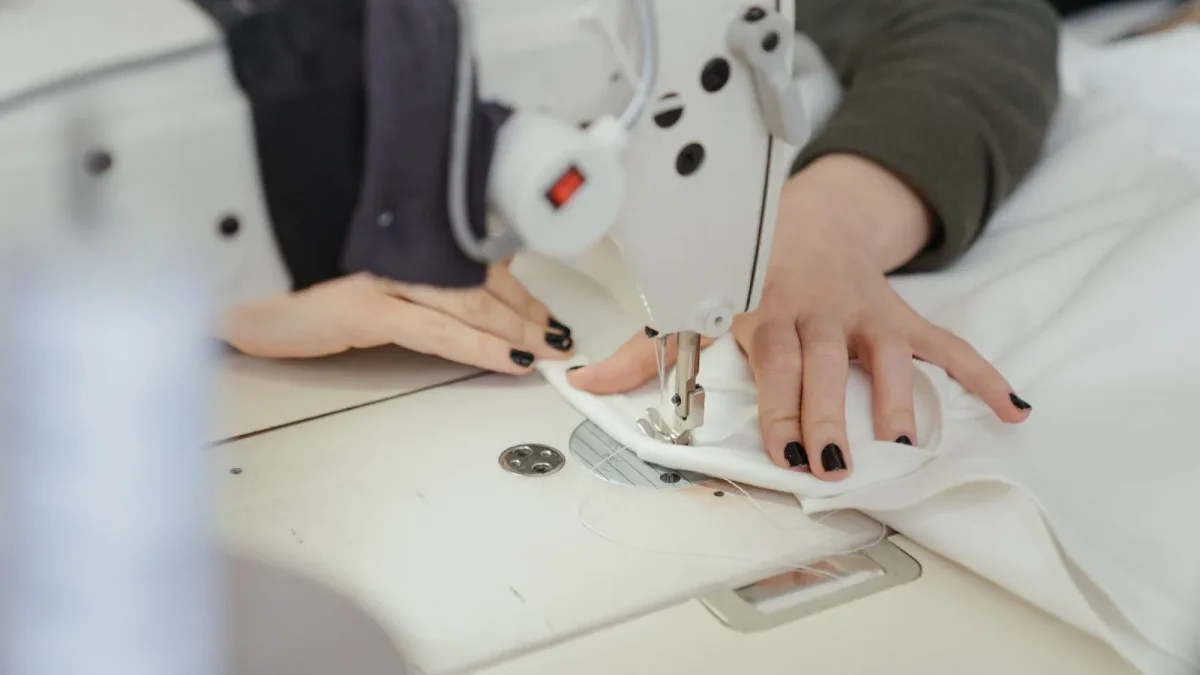
The machine on that $60 table was a 1960s all metal build with a stiff handwheel and one small patch of surface rust on the bed. It passed the visual sweep, turned smooth after a minute of working it by hand, ran quiet at every speed, and stitched an even seam on my own scrap with my own needle.
I offered $40. She took it.
That same month, a friend paid $400 online for a machine listed as mint, barely used, with photos that looked showroom fresh. It never sewed a single stitch again after the drive home. Something in the internal timing had shifted, and the repair estimate came back higher than the machine’s own resale value.
The forty dollar machine still sits on my sewing table today. It has outsewn machines four times its price because it earned its place there the way every good used machine should: tested by hand, in person, before a single dollar changed hands.
Bring the fabric scrap. Bring the two needles. Ten minutes of testing a used sewing machine will tell you more than any listing, any photo, or any seller’s word ever will.
Frequently asked questions
What is the single most telling test when buying a used sewing machine in person?
Turning the handwheel by hand for one full revolution tells you more than almost anything else. Stiffness from old oil is a fair thing to negotiate around, but grinding, grit, or a dead stop partway through the turn points to a broken part inside, worth walking away from.
Should I still buy a used sewing machine if the seller will not let me test sew it?
You can, but price it as an unknown, not as a working machine. Treat the missing sew test the same way you would treat a needed repair, and subtract $30-50 from your offer to cover that risk.
How much less should a used sewing machine cost compared to buying new?
A well kept mechanical machine in full working order typically sells for a third to half of its original retail price. A machine that still needs a belt, a cord, or a full service should cost noticeably less than that, based on the actual repairs it needs.
Is a stiff handwheel on an old sewing machine always a bad sign?
No. Most stiffness comes from old, thickened oil sitting in the bearings and gears after years of storage, and it usually loosens up after two or three short oiling sessions at home. A handwheel that grinds or stops dead partway through a turn is the version worth worrying about.
What should I actually pack to go inspect a used sewing machine?
Bring a folded scrap of medium weight cotton, two fresh needles in different sizes such as an 80/12 and a 90/14, two spools of contrasting thread, and a bobbin wound yourself in the correct class for that machine. That kit is enough to run a real sew test on the spot.

Amit Sisodia
Amit Sisodia is a longtime sewing enthusiast and hobbyist repair tinkerer who has spent years diagnosing tension quirks, jammed bobbins, and stubborn feed dogs across everything from vintage treadle Singers to modern computerized machines. He writes practical, tested guides for BobbinWise so home sewists can spot problems early, tackle safe repairs themselves, and know when it's smarter to call in a technician.


