Key takeaways
- A faintly toasty smell that fades within two minutes of running is almost always dust burning off a motor after storage, not a fault.
- An acrid, plasticky smell or any hint of smoke means unplug the machine at the wall immediately and stop sewing for the day.
- A shiny, glazed drive belt causes a hot rubber smell and a startup squeal long before it actually snaps.
- Sparks near the motor paired with a sharp, metallic smell point to worn brushes, not a problem to sew through.
- A carbon pedal running warm after normal use is expected, but one too hot to hold means it needs a look.
The seam is half finished, thread guide clicking along at a steady rhythm, when something in the smell of the room changes. Not smoke exactly, just a wisp of something hot that was not there a minute ago.
The foot comes off the pedal before the brain even finishes the sentence. That reaction is correct. A sewing machine tells most of its stories through sound and feel, but a burning smell is the one story that means stop first and ask questions second.
The good news buried in an alarming moment: the nose is a genuinely good diagnostic tool here. Hot dust smells nothing like hot rubber, and hot rubber smells nothing like burning insulation. Learning the difference turns a scary pause into a two minute diagnosis.
Stop Sewing First, Diagnose Second
Unplug the machine the moment an unfamiliar hot smell shows up, before finishing even the current line of stitching. A seam can be picked out and resewn. A motor winding that finishes overheating cannot be uncooked.
Let the machine sit unplugged for several minutes before touching anything inside it, since motors, belts, and bulbs all hold heat well after the power cuts. Most burning smells are not actual emergencies, but the first move is identical no matter which one it turns out to be: stop, unplug, and let it cool before deciding anything.
Five Smells and What Each One Is Telling You
A machine’s burning smell almost always comes from one of five sources, and each has its own character once you know what to notice.
Hot Dust (Faintly Toasty)
A faintly toasty smell on a machine’s first run after long storage is usually just settled dust burning off the motor housing. Motors that sat idle for months collect a fine layer of dust and lint around the windings, and the first few minutes of real operation heat that layer enough to smell it.
Run the machine for about two minutes in a well ventilated room and the smell should fade steadily rather than build. If it fades, the machine is fine and simply needed to burn off what storage left behind.
Hot Rubber (Squealing or Glazed)
A smell close to a hot rubber band, often paired with a squeal on startup or during fast sewing, points to the drive belt. A belt running under too much tension, misaligned on its pulleys, or simply glazed from age generates friction heat that the rubber itself starts to smell.
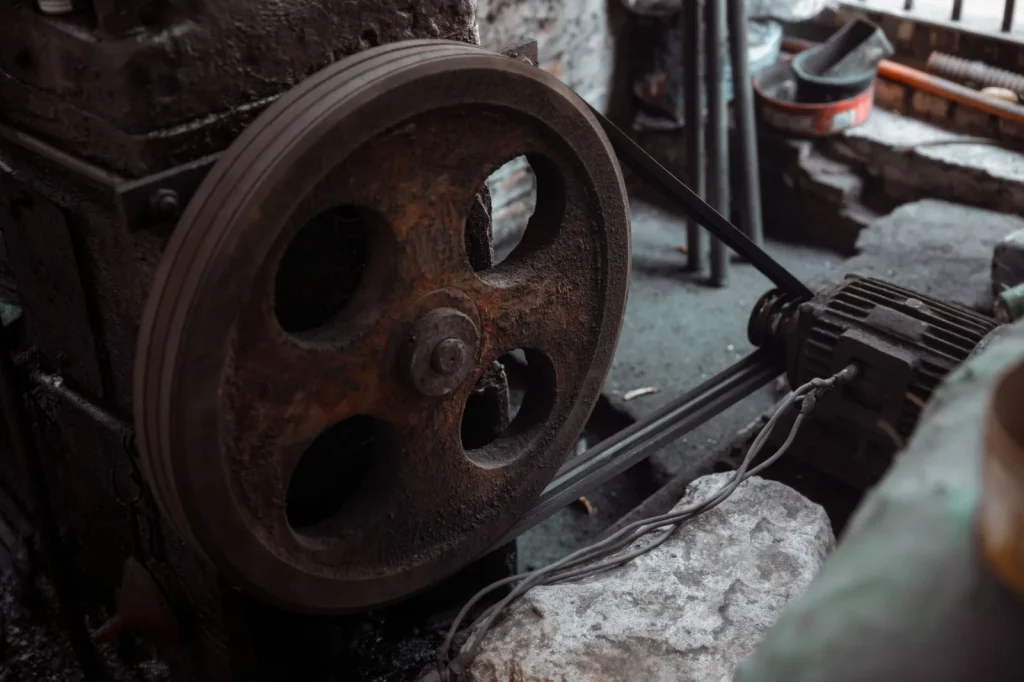
Look at the belt with the machine unplugged. A glazed belt has a shiny, almost polished surface instead of a matte one, and has usually lost some grip along with that shine. Adjust the tension if the machine has that provision, or replace the belt outright, a common part that runs 8 to 15 USD.
Ozone With a Spark (Worn Brushes)
A sharp, slightly metallic smell close to the smell after a lightning storm, especially with tiny visible sparks near the motor, points to worn motor brushes, the small carbon blocks that carry current into the spinning part of the motor.
As they wear, the spring behind each brush pushes it against the commutator with less consistent contact, and that inconsistent contact is what throws sparks and the ozone smell. Brush replacement is a repair shop job on most machines, generally 25 to 45 USD in parts and labor.
Acrid Electrical Burn (Do Not Sew Through This)
An acrid, plasticky smell, sharper and less pleasant than hot dust or hot rubber, usually means insulation is overheating somewhere in the windings or the wiring. This is the one smell on the list that does not get sewn through, monitored, or waited out.
Danger
Stop immediately if the smell is acrid or plasticky, especially with any hint of smoke. Unplug the machine at the wall, not just the foot control, and do not plug it back in to test it. Overheated winding insulation can fail completely or start an electrical fire on the next attempt, and there is no safe way to confirm the cause without opening the motor housing, which is service work.
Hot Oil Smoke (Simply Over Oiled)
A thin haze with a warm oily smell, usually noticed right around the motor or hand wheel area after a recent oiling, is often nothing more than excess oil burning off a warm surface. Machines oiled more generously than the manual calls for sometimes weep a little onto the motor housing where a fine mist meets a hot surface.
Wipe down the area with a clean cloth, run the machine a few minutes in a ventilated room, and confirm the smell fades rather than persists. If it keeps returning, recheck how much oil is going in at each point.
When the Smell Means Stop and Call Someone
A short list of signs means the decision is already made, no diagnosis needed first.
- Any burning smell paired with visible smoke, even a thin wisp.
- A melted plastic odor, distinct from hot dust or hot rubber.
- A plug or outlet that feels hot to the touch, or an outlet face that looks scorched or discolored.
- A breaker that trips the moment the machine is plugged in or switched on.
Any one of these means unplug the machine and stop for the day. A hot plug or a scorched outlet is a house wiring problem, not a machine problem, and calls for an electrician before that outlet gets used again. A tripping breaker paired with a burning smell means a short somewhere in the wiring, and that is service center territory, not a home fix.
Three Checks Once It Is Unplugged and Cool
Once the machine has had a few minutes to cool and none of the danger signs above are present, three quick checks help narrow down the source. Sniff close to the motor vents first, then near the pedal, then near the plug and cord, pausing between each; whichever spot smells strongest is usually the actual source rather than just where the smell drifted.
Look at the belt for a shiny, glazed surface, and give it a gentle press to check for the give a healthy belt should have. Check the pedal’s temperature with the back of a hand after a normal length of sewing: carbon pedals run warm by design, that is normal, but painful hot is not and means the pedal itself needs a look.
The Smell to Severity Cheat Sheet
Here is the full list side by side, ranked from most routine to most urgent.
| Smell | Likely source | What to do |
|---|---|---|
| Faintly toasty, fades within minutes | Settled dust burning off the motor | Run 2 minutes ventilated, monitor |
| Hot rubber, often with a squeal | Slipping or glazed drive belt | Adjust tension or replace the belt |
| Sharp and metallic, tiny sparks | Worn motor brushes | Unplug and book brush replacement |
| Acrid or plasticky, any smoke | Overheated winding or wiring insulation | Unplug at the wall, stop, call service |
| Warm oily haze near the motor | Excess oil burning off a warm surface | Wipe down, ventilate, use less oil next time |
Keeping the Next Scare From Happening
Give the machine real airflow. Sewing with the machine backed up against a wall of stacked fabric bolts or a packed shelf blocks the vents that let a motor shed heat, and that blocked airflow is often what turns ordinary motor warmth into an actual burning smell.
Dust the vents at the back and underside of the machine every time you clean it, using a small brush rather than compressed air held close, which can drive dust further into the motor instead of out.
Match any extension cord to the load, or skip the cord entirely and plug straight into the wall. A long, thin cord sharing a circuit with an iron can run warm enough on its own to add a burning smell that has nothing to do with the machine itself.
From the bench
A Singer 401A came in smelling faintly of smoke on what the owner swore was its first run in fifteen years, though the wiring and brushes both tested fine. The actual source was a thin blanket of dust sitting on top of the motor housing, left behind by a soft cover that had never once been cleaned underneath. Two minutes of running time and a wipe down solved what looked, for one anxious phone call, like a 500 USD motor replacement.
Most burning smells trace back to dust or a tired belt, not a dangerous fault, and both fade or fix in minutes once identified correctly. Treat the acrid, plasticky smell and anything paired with smoke differently every single time, no matter how many times hot dust turned out to be the answer before.
Unplug first, sniff and look second, and decide based on what is actually in front of you rather than what happened last time. A sewing machine that gets that kind of attention keeps its motor for decades instead of one careless afternoon.
Frequently asked questions
Is it normal for a sewing machine to smell hot the first time I use it after storage?
Yes, a faintly toasty smell on the first run after months or years of storage is usually just settled dust burning off the motor housing. Run the machine for about two minutes in a well ventilated room and the smell should fade rather than build. If it keeps getting stronger instead of fading, stop and look for a different cause.
What does it mean if my sewing machine smells like burning rubber?
That smell almost always points to the drive belt, either slipping from wrong tension, misaligned on its pulleys, or glazed from age. Check the belt for a shiny, polished surface once the machine is unplugged and cool. A replacement belt runs about 8 to 15 USD on most home machines and is a straightforward fix.
Is it ever okay to keep sewing if I smell something burning?
No. Stop and unplug the machine first, every time, because a couple of the possible causes are genuinely dangerous and none of them can be told apart with confidence while the machine keeps running. Diagnose it cold and unplugged, then decide whether it is safe to continue.
Why does my machine smell like sparks or ozone?
That smell points to worn motor brushes, the small carbon blocks that carry current into the spinning part of the motor. As they wear down, they lose consistent contact with the commutator and start throwing tiny sparks along with the smell. Brush replacement typically runs 25 to 45 USD in parts and labor at a repair shop.
When should I call an electrician instead of a repair shop?
Call an electrician if the plug or outlet itself feels hot, looks scorched, or if a breaker trips the moment the machine is plugged in. Those signs point to a house wiring problem rather than a fault inside the machine. A repair shop is the right call for anything that traces back to the motor, belt, or brushes instead.

Amit Sisodia
Amit Sisodia is a longtime sewing enthusiast and hobbyist repair tinkerer who has spent years diagnosing tension quirks, jammed bobbins, and stubborn feed dogs across everything from vintage treadle Singers to modern computerized machines. He writes practical, tested guides for BobbinWise so home sewists can spot problems early, tackle safe repairs themselves, and know when it's smarter to call in a technician.